6 Week 5K Training Plan: Couch To 5K For Beginner Runners
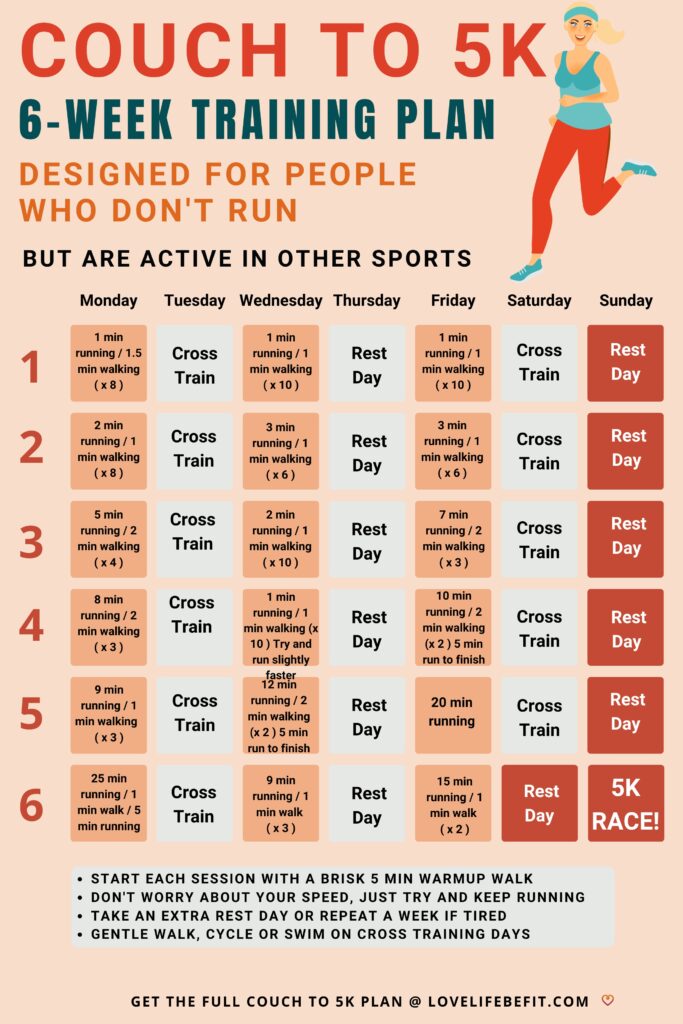
Ready for a challenge? Hoping to run a 5K race, but don’t know where to start? This 6-week 5K Training Plan will get you from Couch to 5K as a beginner runner and prepare you for your first 5K race in just 6 weeks.
This plan is designed for complete beginners. It’s a little faster than the standard 9-week Couch To 5K program, but you can repeat weeks or switch to the standard version if you find it too hard.
This Couch to 5K 6-week training schedule won’t turn you into a top runner overnight, but it will get you to the finish line, running 5K (3.1 miles) without stopping. The plan starts with gentle run/walk intervals and gradually reduces the walking intervals until you’re running continuously.

Our 6 Week Beginner 5K Training Plan
It’s always better to follow a structured training plan. If your training goes well and you manage to keep to the plan, you should be in great shape by race day.
With some grit and determination, it will be possible to run the 5K continuously without stopping. Just remember to pace yourself during the race and don’t set off too fast!
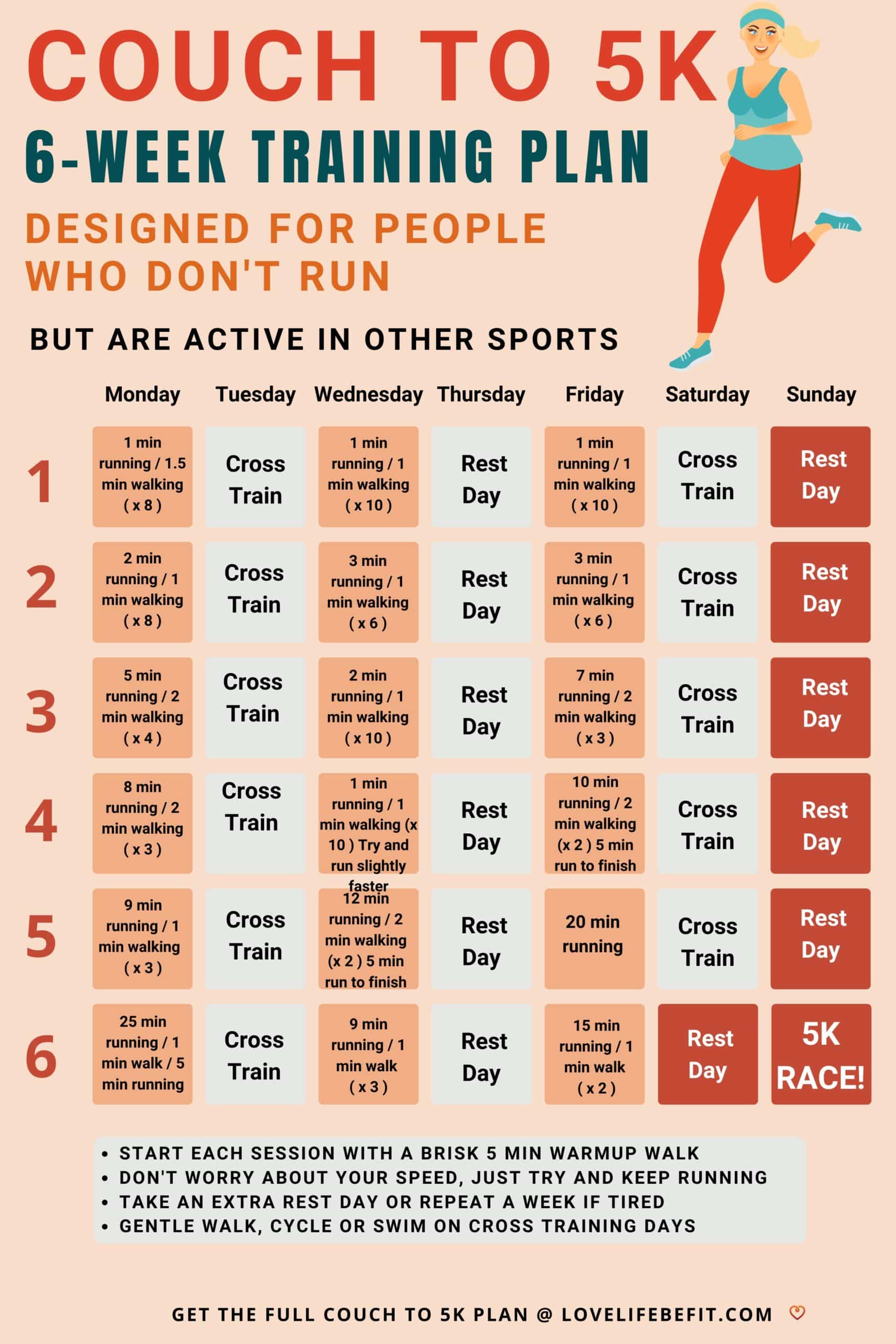
Open the free printable version of this 6-Week Couch to 5K Plan.
How Far Is 5K?
Been talked into doing a 5K race but you don’t know how far it is. If you’re not used to the metric system, the “K” can be confusing. It stands for the metric unit of a kilometer. 5K represents 5000 meters.
If you’re more used to miles, 5K in miles is 3.1 miles.
What Is Couch To 5K?
Couch to 5K, also abbreviated as C25K, was invented by Josh Clark, the founder of a design agency, in 1996. The plan has encouraged millions of people around the world to run, but its founder isn’t a running coach. He was just a new convert to running who understood how agonizing those first few weeks of running can be.
Clark devised a plan with run/walk intervals to ease people through the first few runs. He tested the plan on his Mom – and she loved it!
This training schedule follows the same principles as the original Couch to 5K Plan, but will get you to 5K in just six weeks. The run intervals for the first few sessions are so short you’ll barely realize you’re actually running!
Is It Possible To Train For A 5K In 6 Weeks?
People start Couch to 5K at different fitness levels. There are some non-runners who train for other sports and can probably complete a 5K race without any specific training. They’ll wake up stiff and sore the next day, but it is possible. Other beginner runners haven’t exercised since school, and just the thought of running is terrifying!
For most non-runners, training for a 5K race in 6 weeks will be challenging but possible. You can expect to feel tired after your training sessions and a little sore at times. If the soreness eases off during your warm-up, it’s normally okay to continue training. Otherwise, take an extra rest day.
Actual pain is a red flag. Get any persistent niggles or painful areas checked out straightaway by a physiotherapist.
If this 6-week 5K training plan becomes too hard for you, repeat a week or switch to our 8-Week 5K Training Plan. Couch to 5K should be a gentle introduction to running. If you’re struggling to keep up with the sessions, it’s far better to allow more time to hit your 5K target.
Who is This Training Schedule For?
This six-week 5K training schedule is for non-runners with some residual fitness. You could be young, naturally active, or take part in other sports.
If you’re carrying a lot of excess weight, haven’t exercised in years, or have existing health issues, get a check-up with your doctor before starting a running program.
If you have doubts about your current fitness, choose one of our longer Couch to 5K training programs.
How To Use The 5K Training Program
The training plan comprises interval training, continuous running, cross-training, and rest days. Each part will help to improve your running and get you around the course on race day. You can run the sessions outside or run on a treadmill.
Interval Training
Intervals are normally associated with improving running speed, but this 5K training plan uses intervals to help your body adapt to running. For the first two weeks, the running intervals are very short with walking breaks of one to two minutes.
As you progress through the plan, you’ll find your running distance increases and you’ll work harder for your walking break.
Just because these are run/walk intervals, don’t be tempted to run too fast. Try too hard, and you’ll feel it the next day.
You want to run at an easy pace. Ideally, you’ll be able to talk and run without getting out of breath. This might be a big ask for new runners, but if you’re struggling to breathe, slow down.
Related post: How To Breathe While Running
Cross Training
The plan includes two cross-training days a week. Try not to skip them!
You can cross-train by walking, cycling, swimming… just about any activity that keeps you active for about 30 minutes.
It’s best to stick to an activity you enjoy that’s already familiar. You don’t want the challenge of starting another new sport at the same time as taking up running.
Related post: The Best Cross-Training For Runners
Strength Training
All runners benefit from strength training and it’s particularly important when you’re new to running. Your legs and core need to build up the strength to withstand the impact of running and prevent injuries.
Just 10 to 15 minutes twice a week of these bodyweight exercises for runners will make a big difference. Add them after your runs or at the end of your cross-training sessions.
Rest Days
A rest day is important to allow your muscles, tendons, and joints a chance to recover before the next session. There are two rest days per week in the schedule and we strongly advise that you stick to them.
Aim for complete rest or just some gentle walking. Recovery time will prevent you from feeling drained and tired and reduce the risk of injuries.
Going From Couch To 5K Training Tips
1. Get some comfortable running shoes
Those old trainers lurking at the back of your cupboard won’t cut it. Invest in some comfortable shoes designed for the job.
We’re talking function over fashion. You don’t need anything expensive for your first road race but it’s best to buy your first running shoes at an independent specialist running store. The staff will make sure they fit correctly.
2. Running kit
An old T-shirt, shorts or leggings are all you need. Lightweight breathable running clothing is best but it’s not essential for your first race.
If you’re a woman, you do need to invest in a good sports bra. Go for a high-impact bra that’s comfortable with good support.
3. Don’t run through pain
Expect some discomfort. In fact, expect a lot of discomfort for the first few weeks!
But it should be bearable discomfort, not pain. Achy legs, a bit of soreness is okay. You can always take an extra day off if you’re struggling. Real pain is a sign that something is wrong, so get it checked out before it becomes something major.
4. Walk if you need to
This isn’t a personal schedule, so go ahead and adapt it if you need to. The aim is continuous improvement, to gradually build your running distance.
Everyone’s running journey is different, so if you need to take extra walking breaks – take them. If you need to walk sections on race day – walk! At the end of the six weeks, you should be able to run a 5K without stopping, but no one will judge you if you need to take a walking break.
5. Warm up before running
Start each running session with a 5-minute brisk walk. Find out more about how to start running and try out these dynamic stretching warm-up routines.
6. Hydration and nutrition
Hydrate before you start running and although the runs are quite short, most new runners should take some water with them. Rehydrate fully after your runs and training sessions.
Nutrition is key when you’re placing demands on your body with a new regimen. If you’re running to lose weight, by all means keep your calorie intake in check, but make sure you fuel your runs with lean protein, wholegrains, fresh vegetables, some fruit, and small amounts of healthy fats.
Avoid running fasted. It may be a useful tool for more experienced runners to lose a few pounds, but running is tough enough as a newbie without this extra stress on your body.
Related post: 12 Couch To 5K Tips For Beginner Runners
7. Celebrate
When you’ve completed your first 5K – celebrate, then set your next goal! It could be running a 10K with our 5K to 10K Training Plan.