11 Must-Do Bodyweight Exercises For Runners
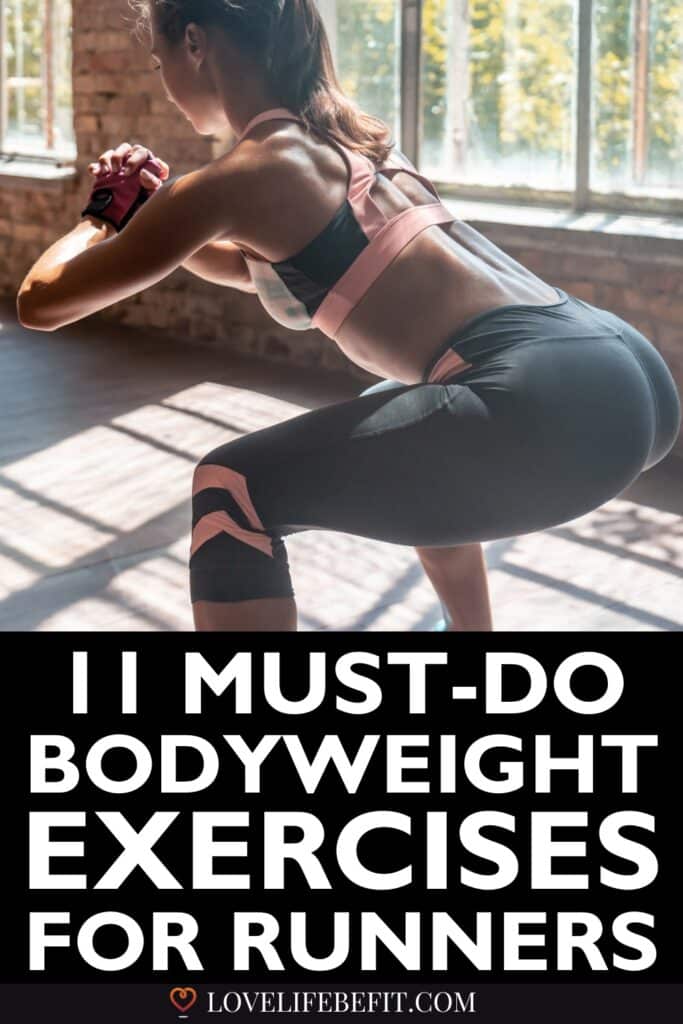
Do you want to be a faster, stronger runner? Then you need these must-do bodyweight exercises. Strength training is essential for runners. It helps runners prevent injury, gives you the power to be a faster, better runner, and improves your running efficiency.
You don’t need a gym membership to strength train. These bodyweight exercises for runners can all be done at home with no equipment. Just adding 2 to 3 short strength training sessions a week to your training schedule can make a huge difference to your running performance.
This list of bodyweight exercises is a good way to strengthen your back and upper body for overall strength: areas often neglected by runners. Includes glutes and hamstring exercises to help build strong legs, and essential core exercises.

What Are Bodyweight Exercises?
Bodyweight exercises are any exercises that use your own body weight as resistance, such as push-ups, squats, lunges, and planks.
Often, bodyweight resistance is all a beginner runner needs to get started with strength training. As you become more experienced, you can progress to using additional resistance with dumbbells, kettlebells, or a resistance band.
But for now, let’s focus on the best bodyweight exercises that all runners can do at home without any equipment.
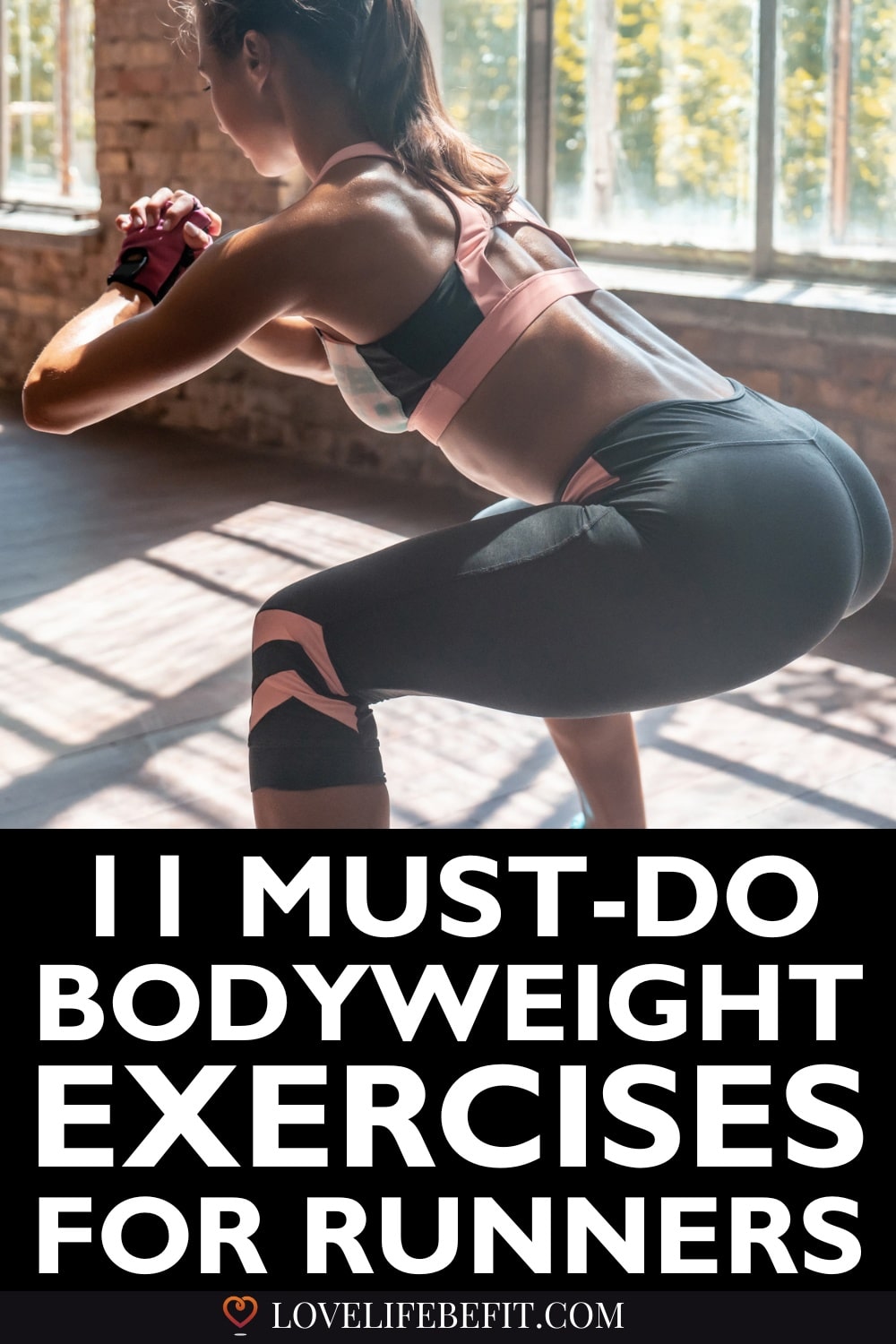
Strength Training For Runners – Why You Need It
- Avoid injuries: Running is a repetitive action with all movement in a straight line in just one plane of motion. It’s possible to be a reasonable runner yet still have weak hips, glutes, hamstrings, and ankles, and be at a high risk of injury.
- Strength training adds power and speed to your running: If you want to run faster, you need to be a strong runner. Track athletes will train in the gym with heavy weights, but most distance runners will get enough benefit from bodyweight training.
- You lose strength as you age: Running performance can start to decline from the age of 40, and some of that decline is linked to a loss of muscle mass. Strength training can help to slow this decline.
- Muscle loss accelerates in menopausal women: By strength training, you can hold on to or even increase muscle mass during menopause. In addition to running, strength training also helps to keep your bones healthy.
- Correct muscle imbalances: Bodyweight exercises are good at revealing weaknesses in your body. If one side of your body is weaker than the other, these exercises will help correct muscle imbalances.
- Better running form: Strength training will strengthen your muscles and joints, and improve your running economy.
This 2017 study, published in the National Library of Medicine concludes that most middle and long-distance runners will benefit from 2 to 3 strength training sessions per week.
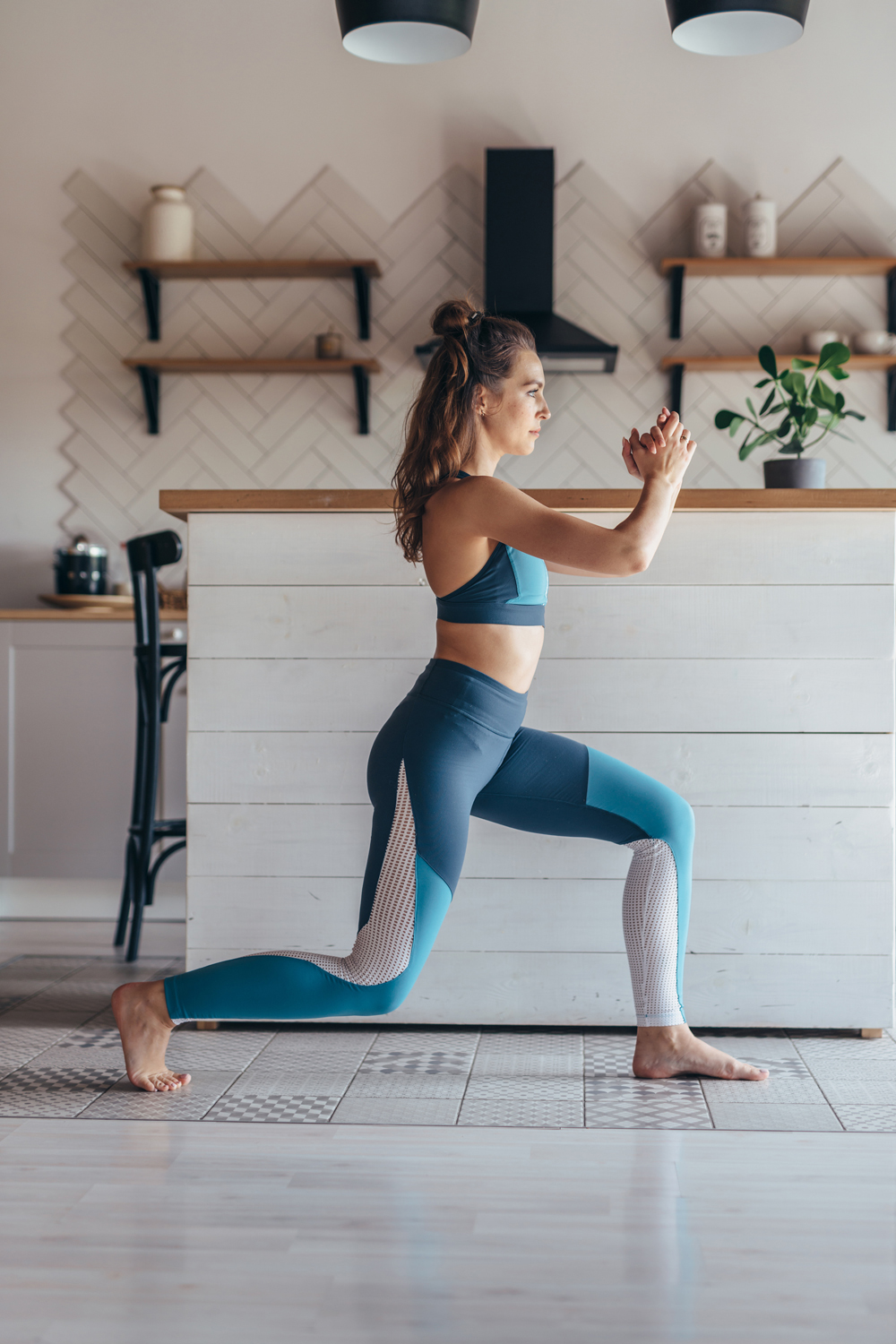
Tips For Strength Training For Runners
1. How Many Times A Week?
Fit the workouts around running sessions. 2-3 short sessions a week will get the best results. These sessions don’t need to be long – just 15 minutes is often enough.
2. Don’t Strength Train Before You Run
Strength training your lower body before a run will leave you with tired, heavy legs. It’s best to strength train 3 to 4 hours after a run, when you’ve had something to eat, and your body’s had time to recover.
3. Don’t Overdo It
With bodyweight exercises, you won’t end up with big, bulky muscles, but it’s still possible to overdo it. You’re a runner, so ensure your running training gets priority and you’re adding the strength training workouts to enhance your running – not the other way around.
4. The Exercises Are Too Hard
Some people will find these bodyweight workouts straightforward, and others will find them hard. If you’re struggling, find a way to regress the exercise. For example, you can use your sofa for support for split squats and lunges, regress a side plank leg lift to a side lying leg lift, and start with a double leg glute bridge before progressing to the single leg version.
5. Less Is More
The aim is to challenge, not strain, your body. When you’re trying a new bodyweight exercise, less is more. Start with just a few repetitions and don’t overdo it. The exercises should help you stay injury-free – you don’t want the exercises to cause injuries by pushing too hard with an untrained body. So always find a way to regress the exercise if there’s any risk of straining.
11 Of The Best Bodyweight Exercises For Runners
Perform 10 to 15 repetitions of each exercise and aim to complete the entire set 2 – 3 times per week. A complete set should take around 15 minutes. Don’t rush – complete each exercise smoothly with good form and posture.
1. Single Leg Glute Bridge
As the name suggests, this is a great exercise for targeting your glutes and gives good hip extension with core stability. If you’re like me, you’ll find that one side is stronger than the other. I like to throw in a few extra reps on my weak side.
- Lie on your back with your knees bent and feet hip-width apart.
- Straighten your left leg and flex your foot. Raise your left leg so it’s in line with your right leg.
- Keep your upper back on the floor, engage your glutes and raise your hips. Squeeze those glutes tight! Make sure you’re feeling the effort in your glutes and not your hamstrings.
- Lower your hips to the floor and repeat 10 times. At the end of your set repeat with the right leg.
Regression: keep both feet on the floor and perform a double-leg glute bridge.
2. 90 90 Push Backs
This exercise I’ve borrowed from Tom Morrison. If you want to reach old age and still be able to move, I highly recommend his mobility program.
- Start on the floor with your right knee in front and your legs in a 90 – 90 shape, each leg forming a 90-degree angle.
- Keep your body as close to upright as possible.
- Raise your rear leg and push back the rear foot parallel to the ground.
- Bring back into the body and repeat keeping the rear leg off the ground throughout the set. Repeat 10 times, then repeat the set with your left knee in front.
Regression: Use a hand to support your body.
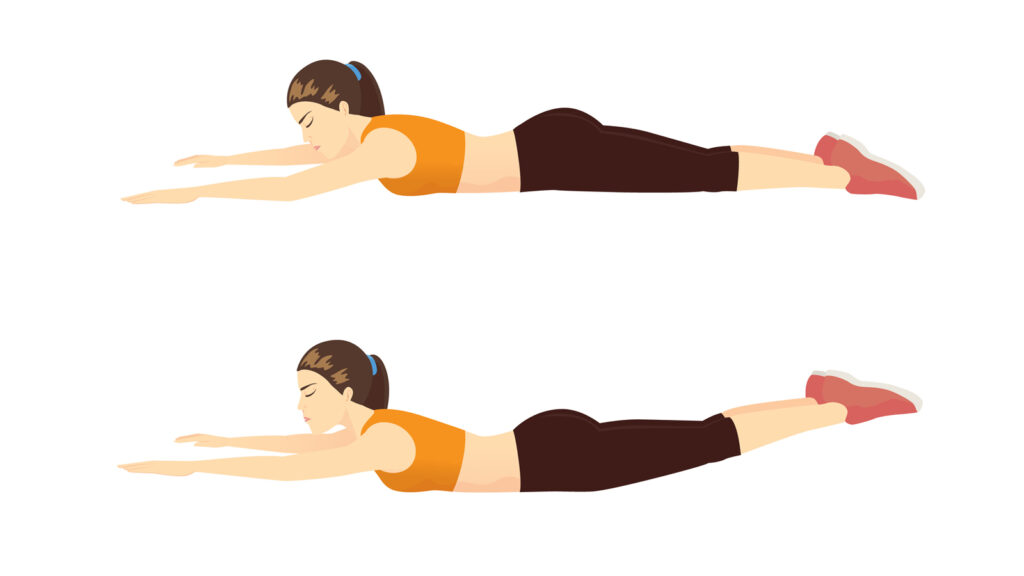
3. Supermans
This is an excellent exercise for your lower back, but it also works your glutes, hamstrings, upper body, and abdominals.
- Start on your stomach with arms straight in front and legs straight behind.
- Lift your arms and legs off the floor keeping your head in a neutral position. Aim for your hands and feet to be about 4-6 inches off the floor.
- Hold for 2-3 seconds.
- Lower to your starting position and repeat 10 times.
Regression: Take turns raising your upper and lower body until you’re strong enough to raise both at once.
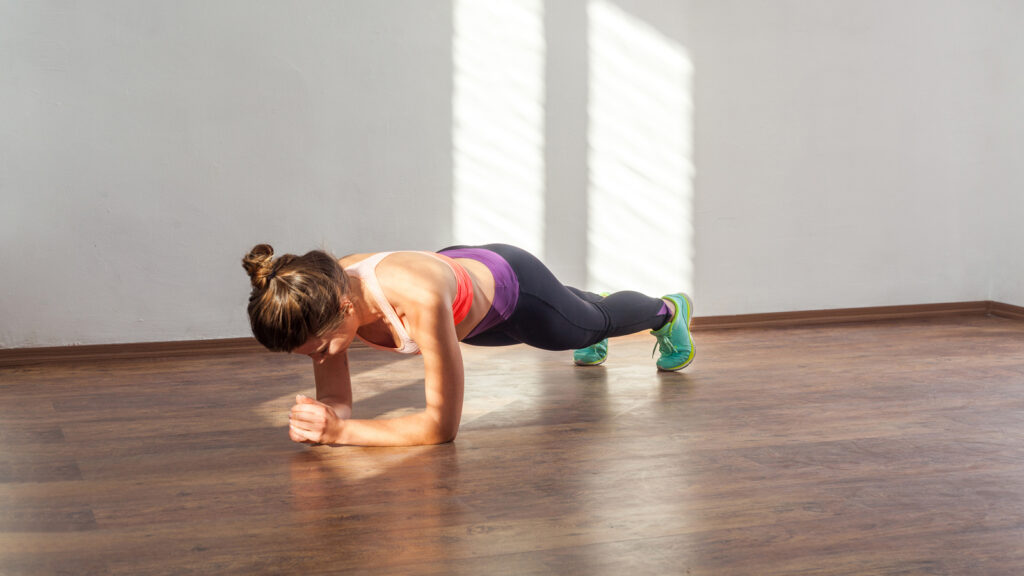
4. Plank
As one of the best-known core exercises, the plank doesn’t need much of an introduction. It’s one of the best bodyweight exercises for runners for improving running posture and core strength.
Make sure you keep your back straight to form a straight line when you’re doing this exercise and don’t let your hips sag.
- Start in a plank position facing downwards and resting on your forearms and toes.
- With your core engaged try and keep your body in a straight line. Your shoulders should be down – not up around your ears.
- Hold the plank position for 30 seconds. As you get stronger, try to hold for longer, working up to holding the plank position for 2+ minutes, or try this plank workout.
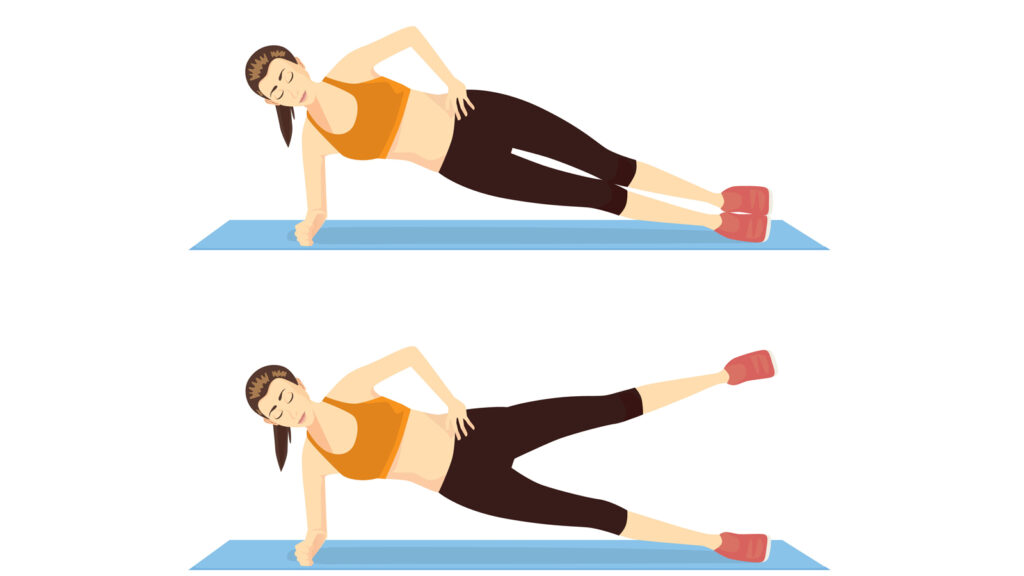
5. Side Plank Leg Lift
Another great exercise for a strong core!
- Start in a plank position resting on your elbows and with your core muscles engaged.
- Rotate your body so you’re resting on one elbow with your feet stacked on top of each other.
- Try and lift the upper leg in the air without letting your hips drop.
- Hold for a few seconds. Lower the leg and repeat from this position. Try for 10 repetitions on each side.
Regression: Get into the starting position resting on one elbow and hold.
6. Windshield Wipers
This is a good exercise for working your obliques.
- Start lying on your back with your knees together and bent at right angles to your body, arms straight out on either side.
- Raise your feet just off the floor and slowly lower your stacked legs to one side.
- Without touching the ground, raise back up and lower to the other side before returning to the starting position.
- Repeat 10 times.
Make this exercise harder by trying with your legs outstretched.
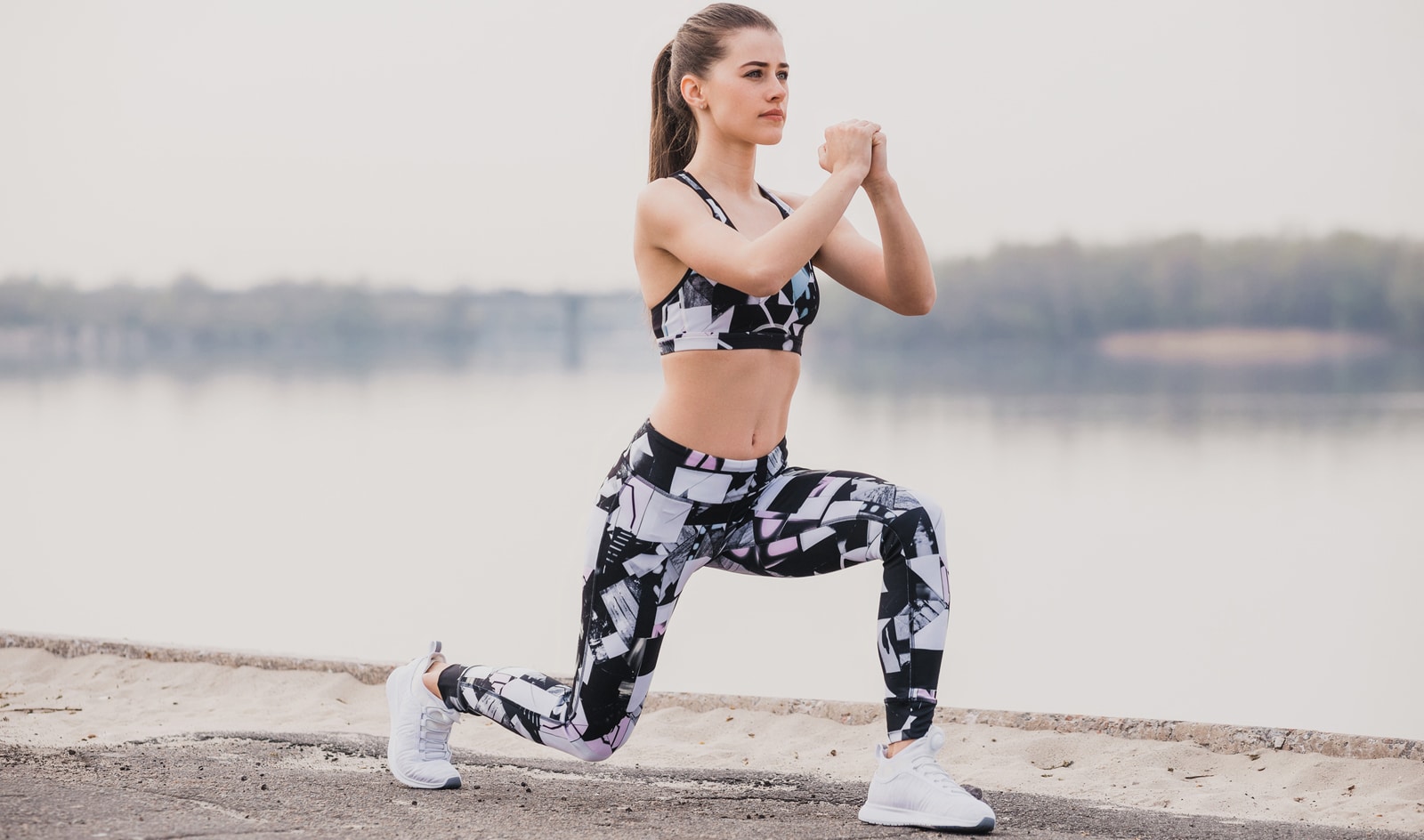
7. Split Squats
Another favorite exercise of mine. Split squats build strength and improve mobility in your ankles and knees.
It’s easy to confuse split squats with lunges but this great video will clear up any confusion.
Aim for 10 repetitions on both legs.
Regression: Hold onto a door frame or rest a hand on your sofa.
8. Reverse Lunges
Many of you will have heard of the forward lunge – I like to do mine as a walking lunge around the house, but reverse lunges are a better option if you have any knee issues.
- Start in a standing position and engage your core muscles.
- Take a big step backward with your left foot.
- Sink your right knee until it’s at 90 degrees and at the same time lower your left knee so it’s hovering just off the floor.
- Push back up and return to the starting position.
- Repeat 10 times on each side.
9. Single Calf Raises
These bodyweight exercises for runners are so important. Your calf muscles absorb impact and propel you forward. Try hopping on one foot at a time to test for weakness.
- Start by standing on one leg.
- Slowly rise up onto the ball of your foot raising your heel as far off the ground as possible.
- Hold then slowly lower to the starting position.
- Repeat up to 15 times on each side.
Regression: Start with lower reps or start by standing on both legs and raising both heels at the same time.
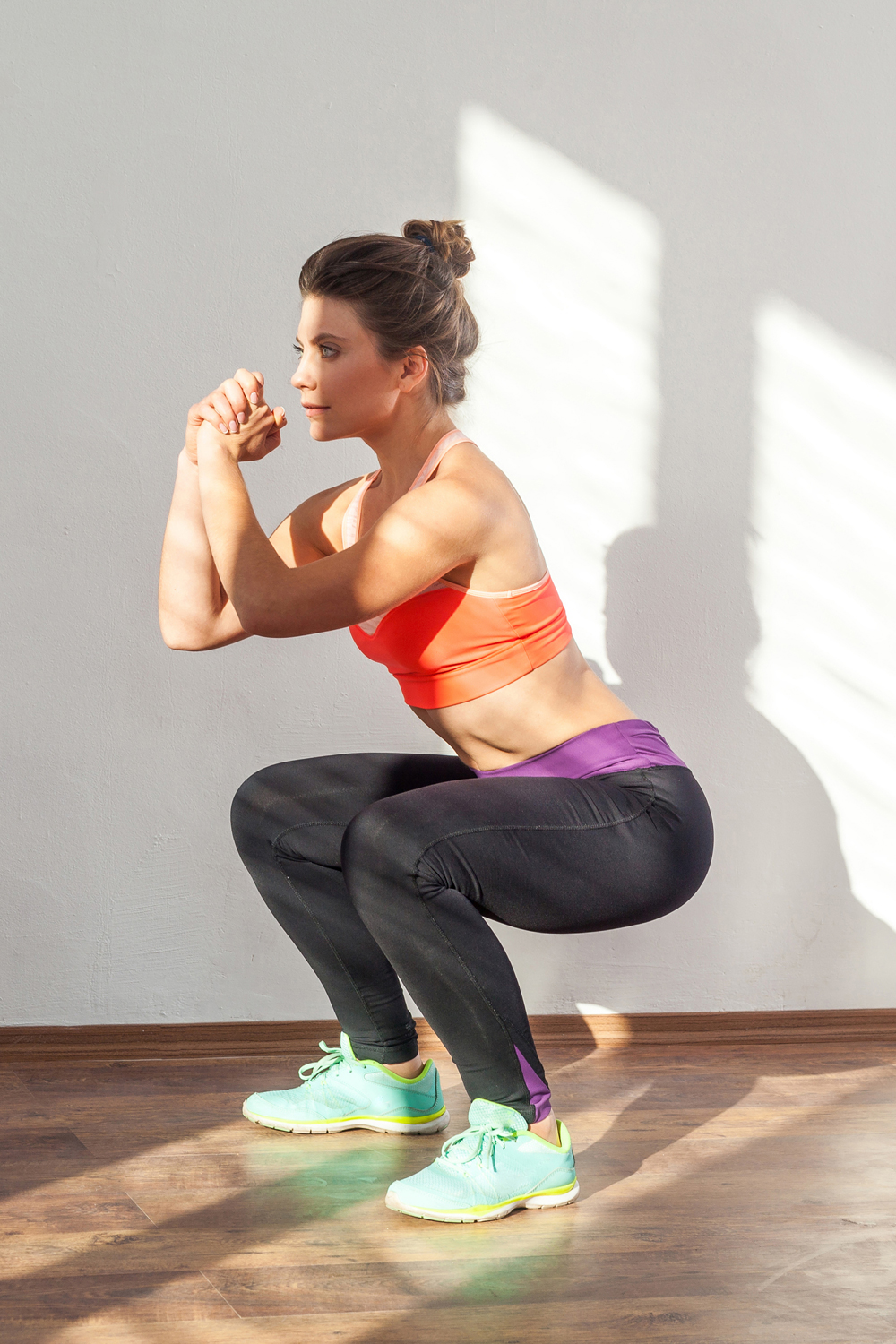
10. The Squat
The squat position works your lower body and core. Plus, it’s a good exercise for improving your hip mobility.
- Stand with your legs just over hip-width apart, feet flat on the floor.
- Keep your back straight and your chest upright.
- Bend at the knees and squat down as far as possible.
- Drive through your heels to return to the standing position.
- Repeat 10 to 15 times.
11. Single-Leg Deadlifts
This is an excellent exercise for targeting your glutes, hamstrings, and lower back while working on your balance.
- Start with your weight on one leg. Engage your glutes.
- Hinge at the hips and tilt your body forward with your weight-bearing leg slightly bent and your free leg pivoting straight out behind you.
- Keep your back straight.
- Reach your hands to the floor in front of you.
- Return to the starting position.
- Repeat 10 – 15 times on each leg.
Make it harder for yourself and challenge those hips with some clockwork single-leg deadlifts!
This is a selection of some of the best bodyweight exercises for runners. For consistent improvement, seek out exercises that target any weaknesses. If you find a movement difficult, it’s probably something you should be focusing on improving.
Aim for steady continuous improvement by working these bodyweight exercises into your weekly training. It’s a good way to prevent injuries and improve your running performance.