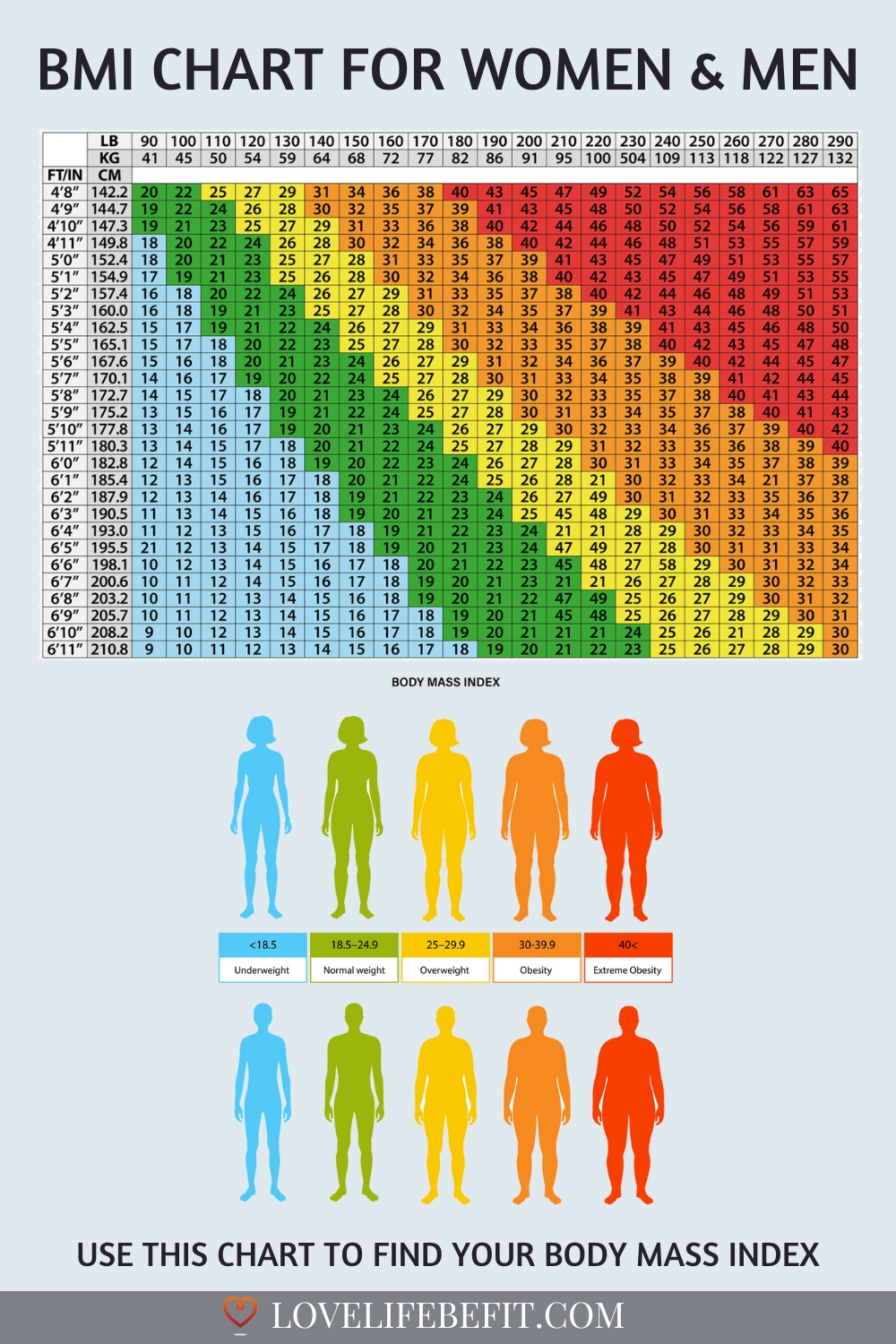
What Should Your BMI Be? Using A Body Mass Index Calculator
Please note: This BMI information only applies to adults.
A body mass index calculator is only a rough guide to your ideal weight. It’s far from perfect. The Body Mass Index (BMI) cannot distinguish between muscle weight and body fat. Athletes can have a high BMI with low body fat levels and if your muscle mass is very low, your BMI level may be in the healthy range despite carrying high levels of visceral fat.
Know its limitations. At best, a body mass calculator is a rough indicator of whether you’re underweight, of normal healthy weight, overweight, or obese.

The best ways to hit a healthy BMI:
- Improving your diet: eating your 5-a-day fruit and vegetables, reducing high-sugar, high-fat foods, and eating more whole grains. Choose healthier protein sources: beans, peas, lentils, tofu, nuts, and protein from lean meat. Plant-based foods are extremely low in saturated fat and cholesterol-free.
- Improve your fitness by exercising regularly: try walking for 30 minutes a day, and spend 10-15 minutes twice a week on strength training.
- Reducing your consumption of alcohol,
- If you’re a smoker, quit smoking.
BMI Calculator
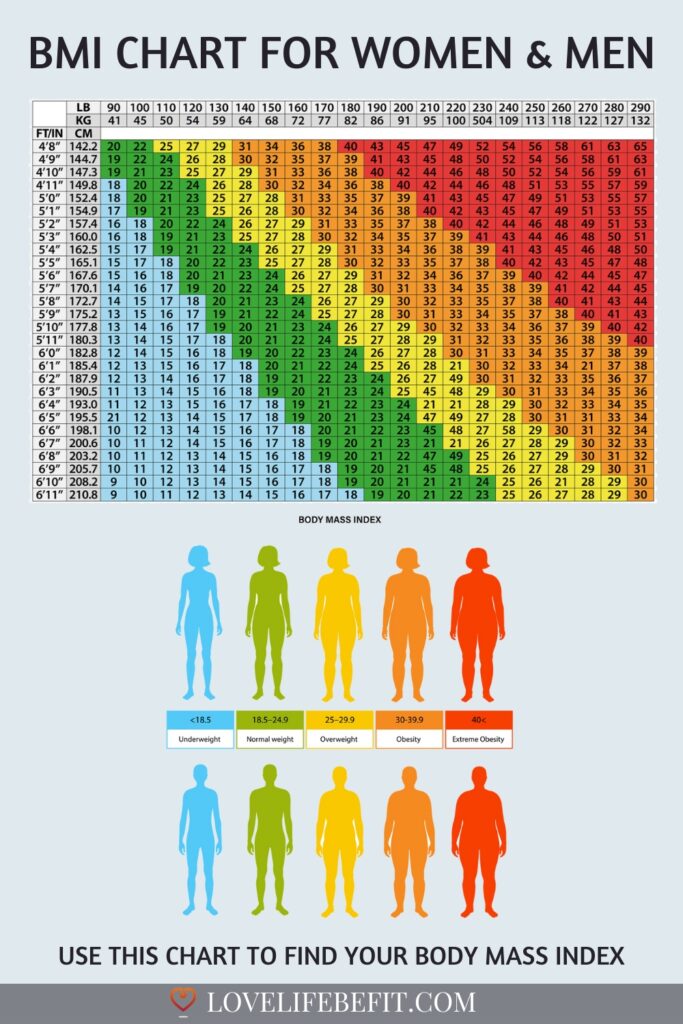
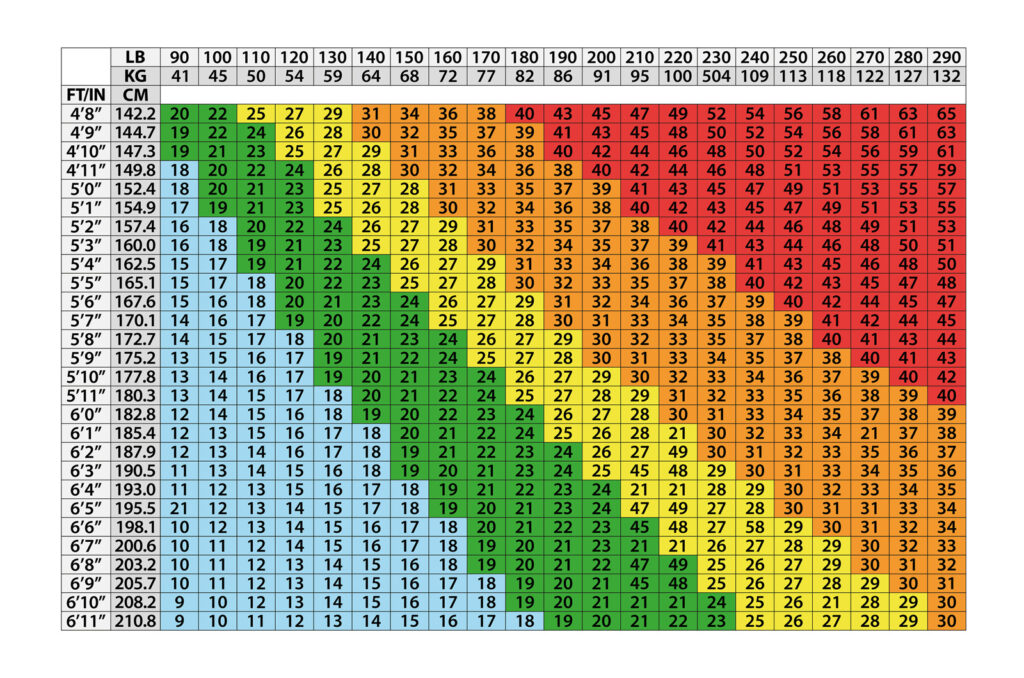
Check your BMI using these calculated values BUT remember it’s only an indicator.
The BMI chart isn’t age or sex-related. The BMI chart for women is the same for men. You may come across some charts attempting to differentiate BMI results for men and women or differentiating based on age but all you’re doing is adding another layer of inaccuracy to an inaccurate and often misleading indicator.
Use this chart as a rough guide only. If your diet is poor and you never exercise I’m sure you don’t need a chart to tell you it’s time to take action!

Often a visual image can give you a better idea of the amount of body fat you’re carrying.
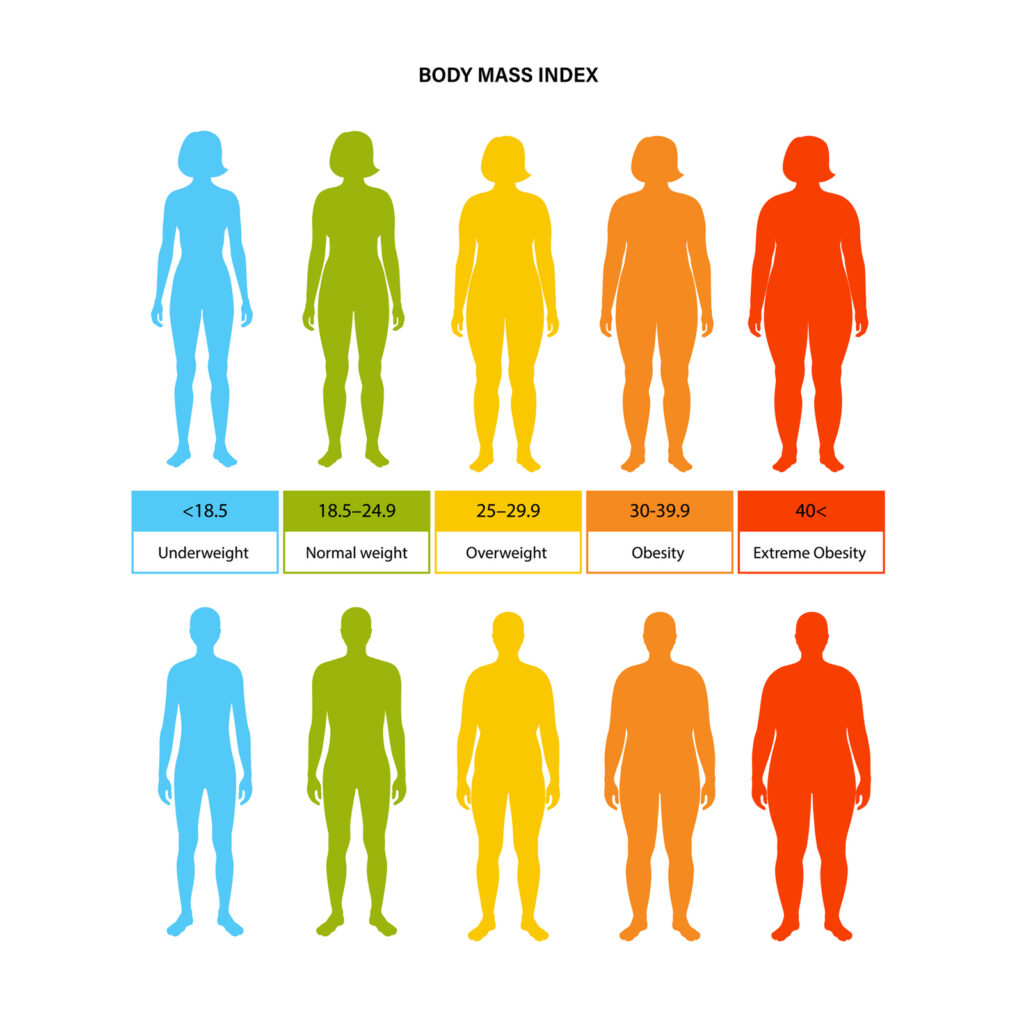
| Underweight | < 18.5 |
| Normal | 18.5 – 24.99 |
| Overweight | 25 – 29.99 |
| Obese | > 30 |
Underweight
Being underweight can lead to serious health issues. It can mean your body is failing to get the nutrients you need.
Often the underlying causes of being underweight are eating disorders, depression, or stress. It’s time to get help. Make a doctor’s appointment or call a helpline. UK helpline. US helpline.
Normal Healthy Weight
Woo-hoo! Your BMI is in the normal range. Keep up the good work! Just make sure you eat healthy foods and exercise regularly.
A normal BMI doesn’t guarantee good health but it does mean less risk of weight-related conditions such as type 2 diabetes, heart disease, and high blood pressure. If you have any concerns – check in with your doctor.
Overweight
If your BMI falls into the overweight range, you could be at greater risk of weight-related conditions. The main risks are type 2 diabetes, heart disease, and high blood pressure.
If you’re an athlete who eats healthy food and exercises regularly, your BMI in the overweight range may be caused by the weight of your muscles.
BMI is a poor indicator of overall health but it can be a sign that you need to do something about your weight.
Take action to improve your health by:
- Avoiding overeating.
- Improving your diet: lean protein, wholegrains, lots of vegetables, some fruit, and small amounts of healthy fats.
- Eliminating processed foods from your diet.
- Cutting back on added sugar.
- Exercising!
Waist to Height Ratio
For many, a better indicator of your health is your waist-to-height ratio:
- Find the bottom of your ribs and the top of your hip bone. Between these 2 points is where you want to measure your waist with a tape measure.
- Make sure the tape measure is pulled tight but not digging into your skin.
- Breathe out and make a note of the measurement.
- Divide this measurement by your height. You can use inches or centimeters, provided you use the same unit for both measurements.
A healthy height-to-weight ratio is in the range 0.4 to 0.49.
Obese
If your BMI falls into the obese range, you’re at high risk for heart disease, stroke, type 2 diabetes, high blood pressure, and some cancers. It’s time to check in with your doctor and make some big changes to your lifestyle.
Seek out medical advice on how to improve your diet and safely exercise. Healthy eating and regular exercise are key to improving your health. It’s time to take action!