7 Tips & Exercises To Fix Bad Posture

We’re glued to our phones, spend hours hunched over laptops, and don’t always get enough exercise. It plays havoc with our posture. If you’ve realised your bad posture is letting you down, the good news is it’s something you can fix. Spending a few minutes a day following these tips and exercises will help to improve your posture. Ready to make a difference?

Why Does Good Posture Matter?
Posture is the way you stand, walk, or sit. Young children have perfect posture, but as we grow, we develop bad habits. Spending too much time sitting, slouching on the sofa, thrusting a hip forward, and tilting our pelvis for the perfect photo pose – we’re all guilty of sabotaging our posture.
Good posture allows us to move with ease without putting excessive strain on our supporting muscles and ligaments. Bad posture can lead to daily aches and pains and affect our mobility as we age. Becoming aware of bad habits is the first step to fixing them.
Warning Signs Of Bad Posture
- Chronic back or neck pain – Poor posture causes spine misalignment and persistent discomfort.
- Frequent headaches – Tension in your neck and shoulders may result in headaches.
- Rounded shoulders or forward head tilt.
- Hunched back.
- Tilted pelvis.
- Muscle fatigue or body aches and pains.

How To Correct Bad Posture, 7 Causes & Tips
1. Tech Neck
If you spend most of your day hunched over a laptop or scrolling on your phone, there’s a high risk that your body will adopt a hunched, forward-leaning posture. Do you suffer from neck and shoulder stiffness and pain? Tech neck is a likely cause. Fix it by raising your devices to eye level. Follow the 20-20-20 rule: every 20 minutes, look at something 20 feet away for 20 seconds, and regularly perform the suggested exercises to strengthen and stretch your upper body.
2. Sitting Too Much
Prolonged periods of sitting, such as slouching on a couch or working at a desk, are the enemy of good posture. Take regular breaks. Every 30 minutes, stand up and walk about or have a little stretch at your desk.
3. Poorly Set Up Furniture & Equipment
Ensure your work desk is set up with good ergonomics. Chairs, desks, and computer screens are adjusted and aligned to encourage good posture. If possible, use a standing desk.
4. Lack of Exercise
Staying active and maintaining a healthy weight is important for your posture. You need strong muscles to support your spine, and excess weight puts a strain on your body.
5. Weak Core Muscles
Often neglected, your core muscles play an important part in maintaining good posture. Spend a few minutes a day working on your core, and you’ll see your posture improve drastically.
6. Neglecting Your Feet
Good posture starts with strong, happy feet. Wear good supportive footwear and remember to stretch and strengthen your foot muscles.
7. Clenched Neck Muscles
Often, stress manifests as muscle clenching in your jaw, neck, and shoulders. Never ignore the signs and address the causes of stress by seeking support from friends, family, and professional health care providers.
7 Exercises To Improve Your Posture
1. Child’s Pose
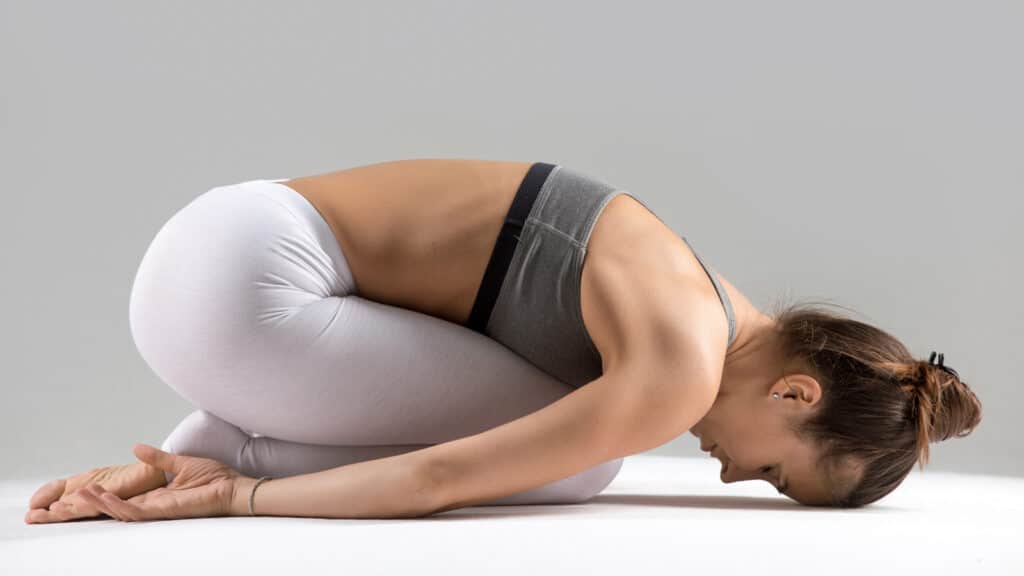
Child’s Pose will help you stretch your spine and counter the effects of sitting hunched over a laptop or similar device. Start on your hands and knees, then let your hips sink back towards your heels, resting your chest on your knees. Stretch your arms out in front, or tuck them at your sides, and rest your forehead on the ground. Breathe deeply and relax.
2. Cat Cow
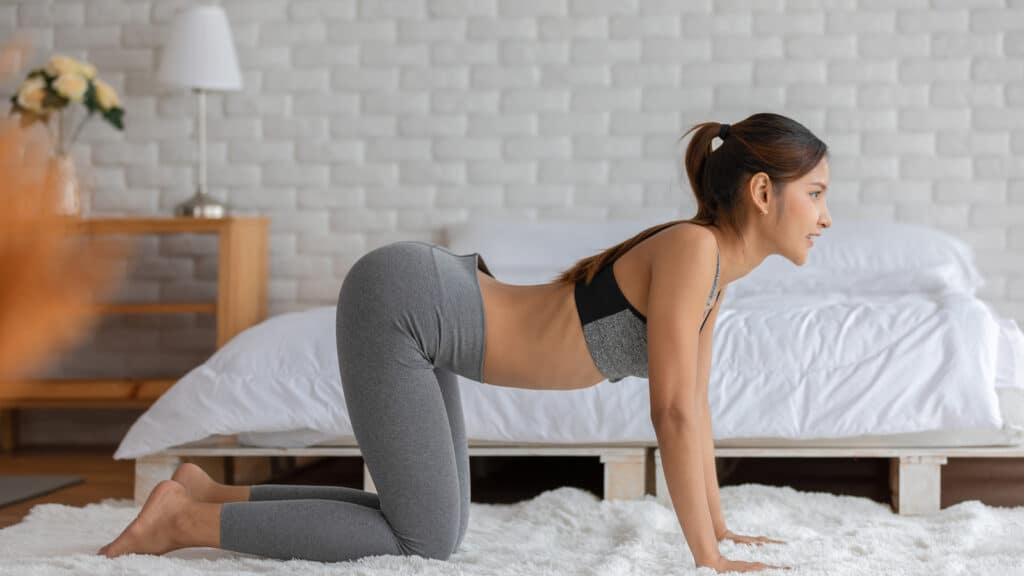
Cat-cow opens up your upper body and makes you aware of how your spine is meant to move. Start in a tabletop position on your hands and knees, and gently lower your belly, open your chest, and gaze up as you inhale. Exhale into cat pose, rounding your back, dropping your shoulders, and tucking your chin. Repeat and enjoy the movement of your spine.
3. Bridge
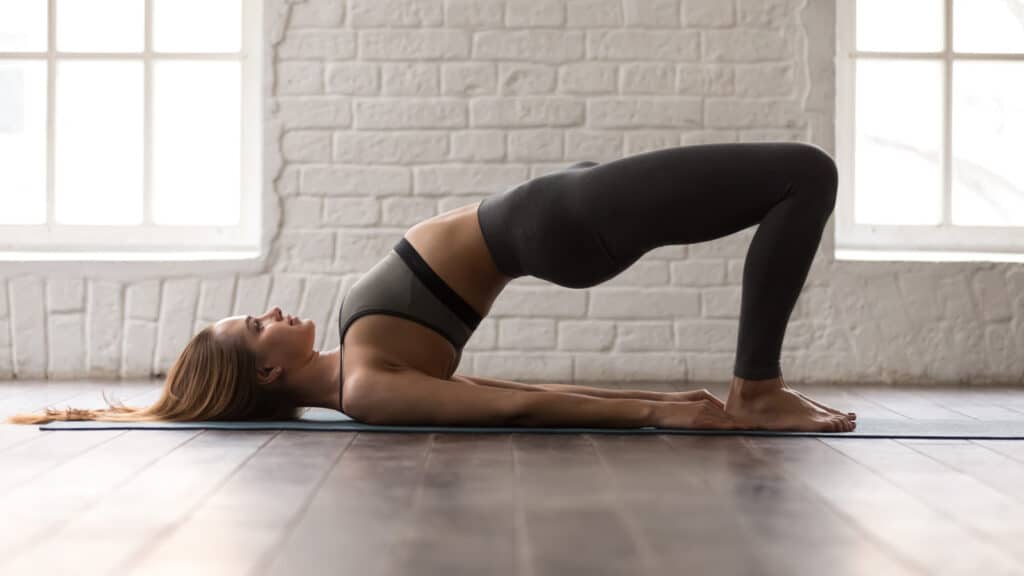
Bridge pose stretches out your upper spine, relieving back pain. Start by lying on your back with your knees bent and your feet hip-width apart. Keep your arms at your sides, palms down. Inhale and push your hips to the ceiling, keeping your head and shoulders flat on the floor. Make sure there’s no tension in your neck. Hold the position for a few moments, breathing deeply before exhaling and gently lowering your hips to the ground.
4. Forward Fold
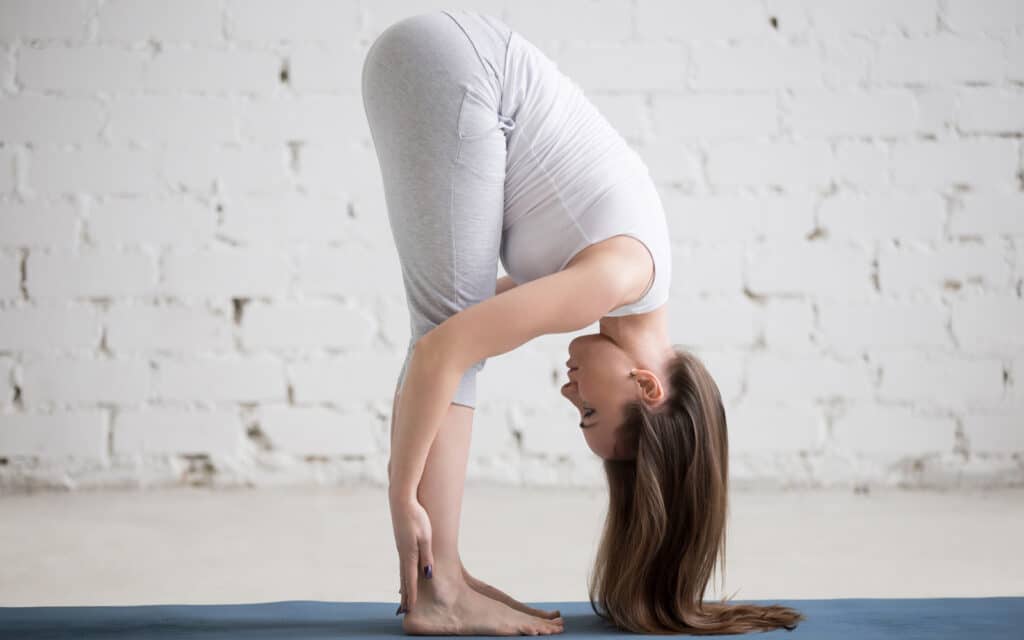
Your spine doesn’t work in isolation. Tight glutes and hamstrings can tug at your spine, causing back pain and affecting your posture. The forward fold is a wonderful way to stretch the muscles in your butt and the backs of your legs. With your big toes touching and your heels slightly apart, fold forward at the hips, lowering your hands toward the floor. If your hands don’t touch the floor, just go as far as you can without forcing it. For a deeper stretch, while you’re in the forward fold, clench your glutes and hamstrings for a few seconds, then release. You should find you can naturally reach a little further.
5. Cobra Pose
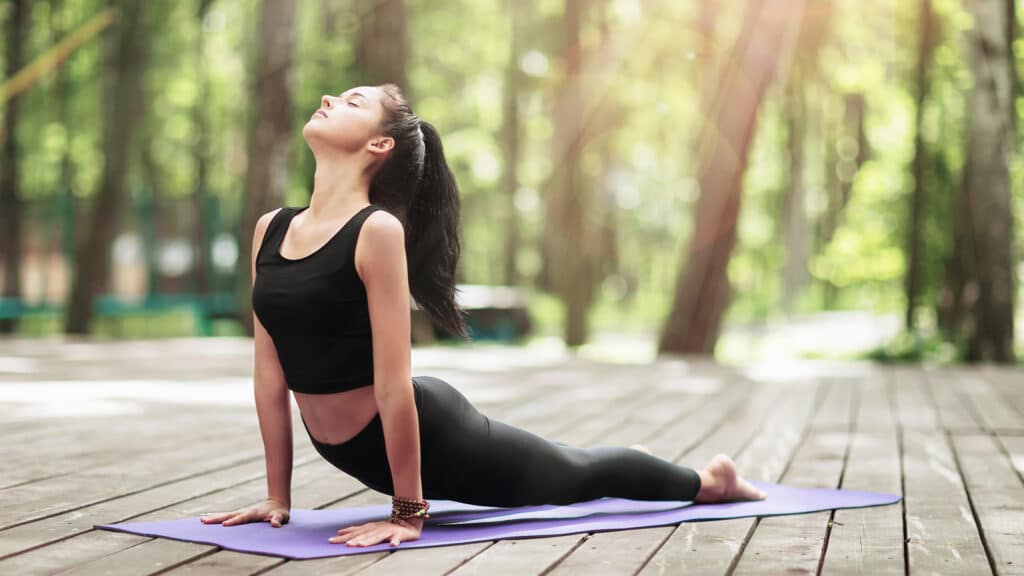
The Cobra pose opens the chest and upper body, improving posture. Start by lying face down on the floor with your legs hip-width apart and your lower limbs pressed into the floor. Place your hands under your shoulders, keeping your elbows close to your body. Inhale and exhale as you push down with your hands and use your back strength to lift your upper body off the floor. Roll your shoulders back and down as you lift. Make sure there’s no tension in your neck and keep your neck long. Hold for as long as feels comfortable, then exhale and release back to the mat.
6. Downward Facing Dog
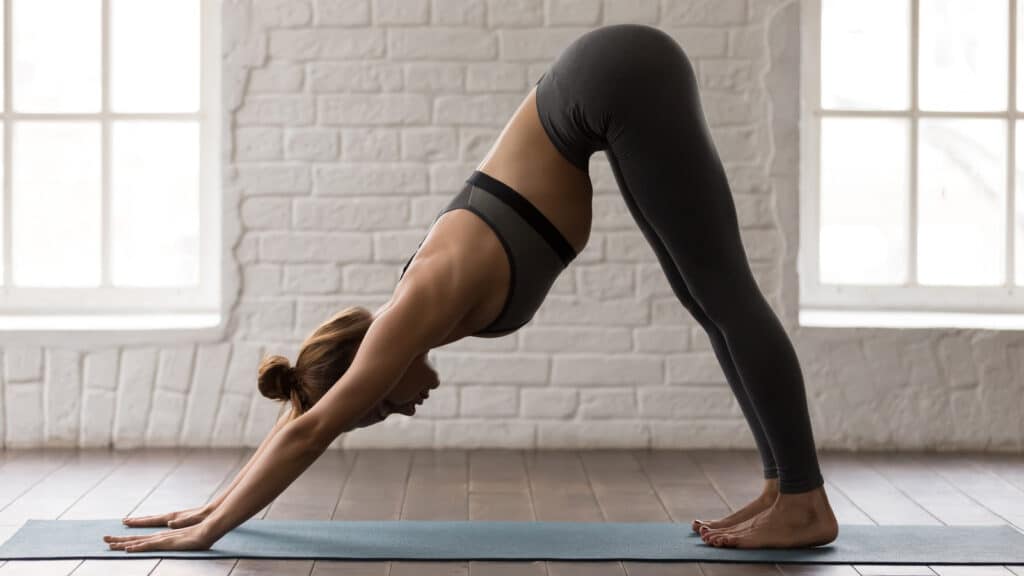
Downward-Facing Dog is the perfect counter movement to the Cobra. The pose lengthens your spine, stretching your back, shoulders, arms, calves, and hamstrings. Start on the floor on your hands and knees, then lift your knees off the floor, pushing your hips up and back. Keep your hands shoulder-width apart, your feet hip-width apart, and stretch your spine. Play around in the pose, keep your hands active, flex your ankles, have a little wriggle – anything that feels good!
7. Spinal Twists

Your spine is designed to twist, not spend all day in one fixed, upright, or hunched-over position. The many variations of spinal twists help restore spinal movement. For the simplest version, lie on your back on a yoga mat or even on your bed, and let your legs fall to one side while stretching the opposite arm out to the side. Relax and feel a gentle stretch along your spine, then repeat in the other direction.
Becoming more aware of your body and incorporating these exercises into your daily routine will help you improve your posture.