9 Best Core Stability Exercises For Balance & Strength
If you struggle with your balance, building a strong, stable core will definitely help. Good core stability helps prevent injuries, protects your lower back, and makes you less prone to serious falls. A strong core is essential for running and other athletic activities, but just as necessary for everyday activities such as picking up items from the floor or twisting to reach for an item on a high shelf. Improve your balance by adding these core strength exercises to your regular workouts.
What Is Core Stability?
Talk about core stability, and it’s all too easy to think about your abs, specifically the rectus abdominis, the muscle that can give you a six-pack and runs down the front of your stomach. In reality, this is just one part of your core. Instead, it’s your entire trunk, including your abdominals, obliques, and the muscles of your back, pelvis, and hips. For core stability, you need to control all these key muscle groups. Think of it as your front, sides, and back, with your glutes holding everything together at your base.
To build a strong core, you need to work your front (anterior core), your sides (lateral core), and your back (posterior core). Then top it off with exercises to build strong glutes. This way you’ll be able to lift, twist, bend, and of course, balance.
What Are The Benefits Of A Strong Core?
A strong core stabilizes your entire body.
- It improves posture.
- Helps prevent or reduce lower back and hip pain.
- Improves balance and helps prevent falls.
- It’s essential to be a better runner or excel at other sports, including lifting weights.
- Makes your movements more efficient.
- Everyday tasks such as picking up shopping or climbing stairs become easier.
- Can reduce the risk of lower body injuries.
9 Best Core Stability Exercises For Balance & Strength
Anterior Core Exercises
1. Low Plank
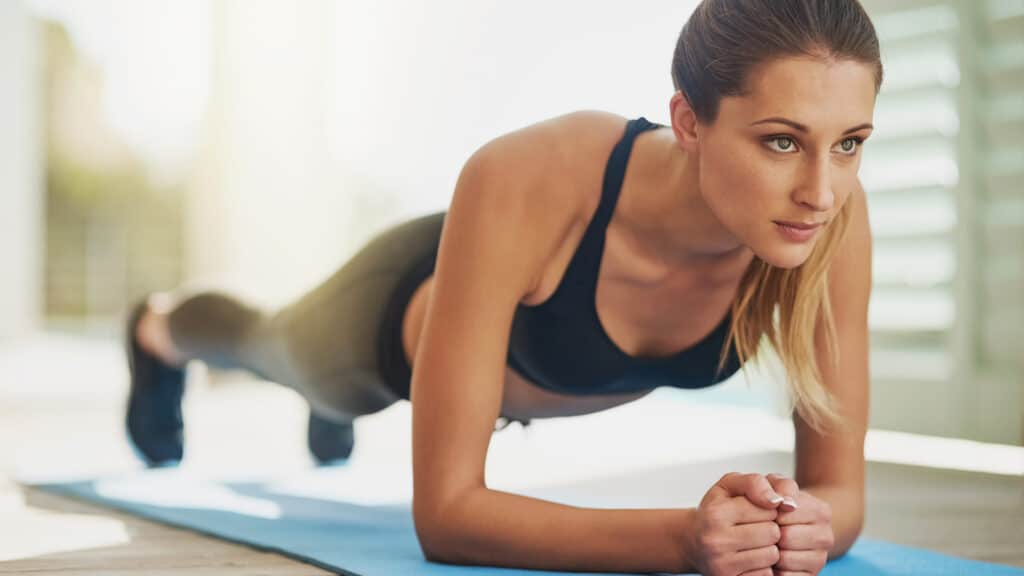
This is perhaps the strongest exercise for working your anterior core. Forget stomach crunches; we all spend far too much time sitting and bent over. Instead, master the low plank. It works your deep core stabilizers (rectus abdominis and transverse abdominis).
How To Do A Low Plank: Rest on your forearms by stacking your elbows under your shoulders, extend your legs, and tuck your feet under. Engage your core and lift off the ground, pulling your belly button towards your spine while lightly squeezing your glutes. Keep your neck in a neutral position, and maintain a straight line from your head to your feet, making sure your bottom doesn’t sag. Focus on slow and steady breathing. Hold the position for 30 seconds or as long as possible. Aim to do 3 sets of 30 seconds.
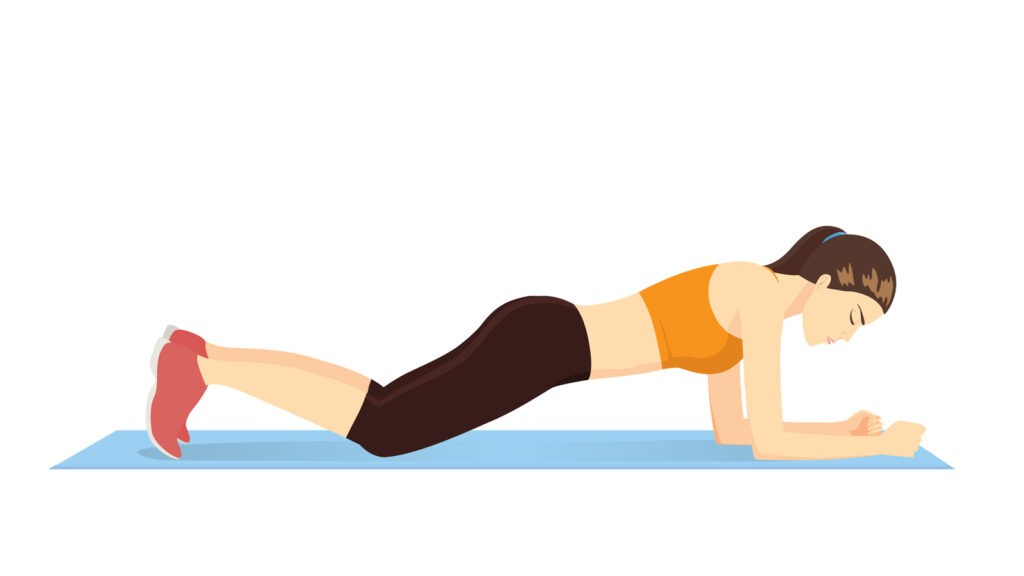
Regression. You may find you need to work up to a full plank by starting with a knee plank variation. In this version, keep your knees on the ground to take some of your weight.
2. Low Plank With Knee Taps
Once you’ve mastered the plank and you’re able to do 3 sets of 30 seconds, you’re ready to add some variations to your anterior core workout. A plank with knee taps enhances your hip stability and makes your core muscles work harder to keep your body level. Aim for 3 sets of 10 taps on each side.
3. Plank With Shoulder Taps
This advanced anterior core workout will challenge your core and obliques to keep your torso and hips level. Aim for 3 sets of 10 taps on each side.
Lateral Core Exercises
4. Side Plank
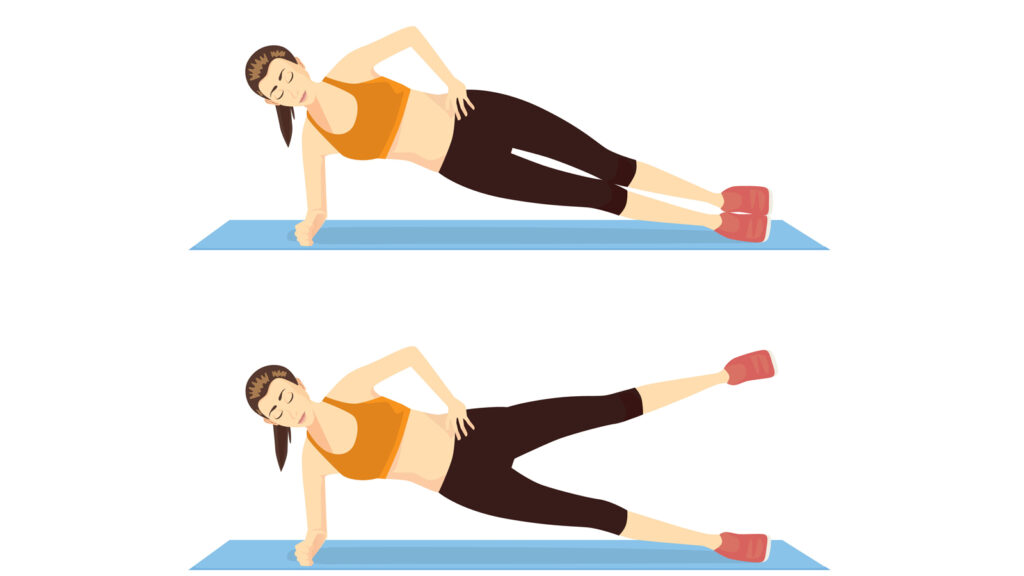
Side planks will build your lateral core strength and, by targeting one side at a time, can help with muscle imbalances.
How To Do A Side Plank: Start in a low plank position resting on your elbows and with your core muscles engaged. Rotate your body so you’re resting on one elbow with your feet stacked on top of each other. Try to hold for 30 seconds. Repeat for 3 sets.
Variation: Challenge yourself by lifting the upper leg in the air without letting your hips drop. Hold for a few seconds. Lower the leg and repeat from this position. Repeat for 3 sets of 10 repetitions on each side.
Regression: Keep your knees stacked on the ground with a kneeling side plank.
5. Side Plank With Hip Lifts
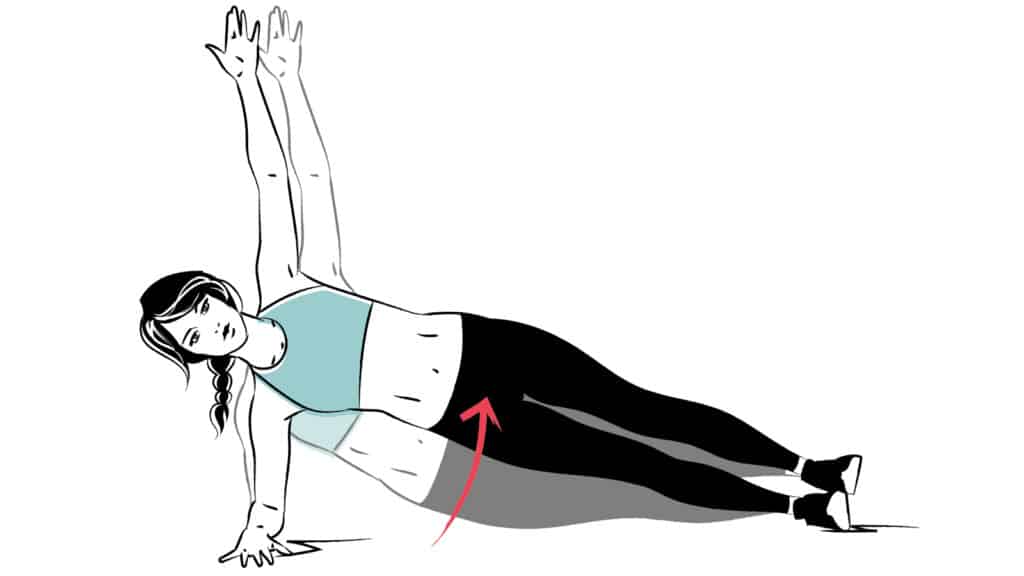
If you can comfortably hold a side plank, you can challenge yourself further with hip dips. Starting in a side plank position, dip your hips towards the ground and lift back up as high as possible. Repeat. Aim for 3 sets of 10 repetitions on both sides.
Posterior Core Exercises
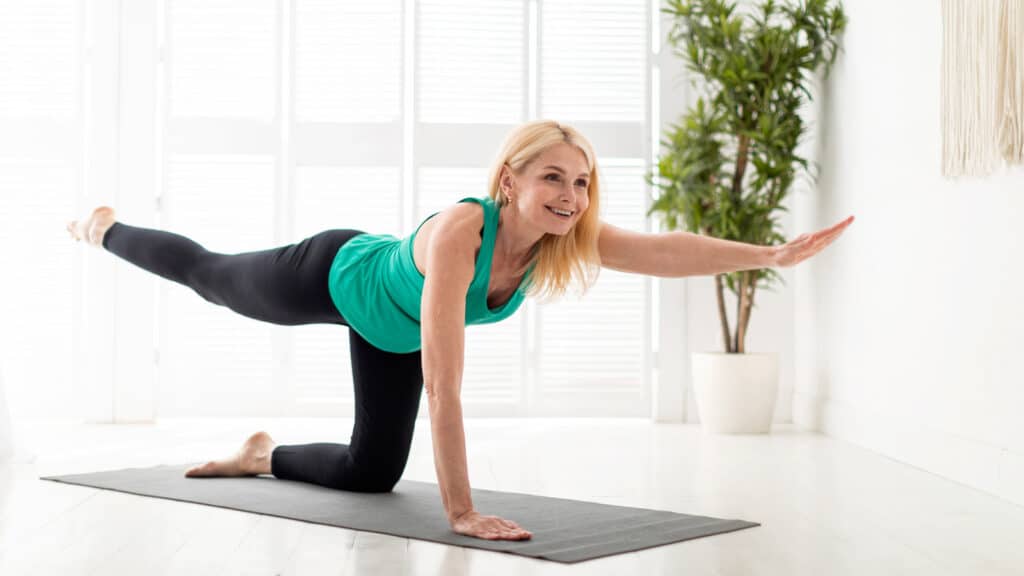
6. Bird Dog
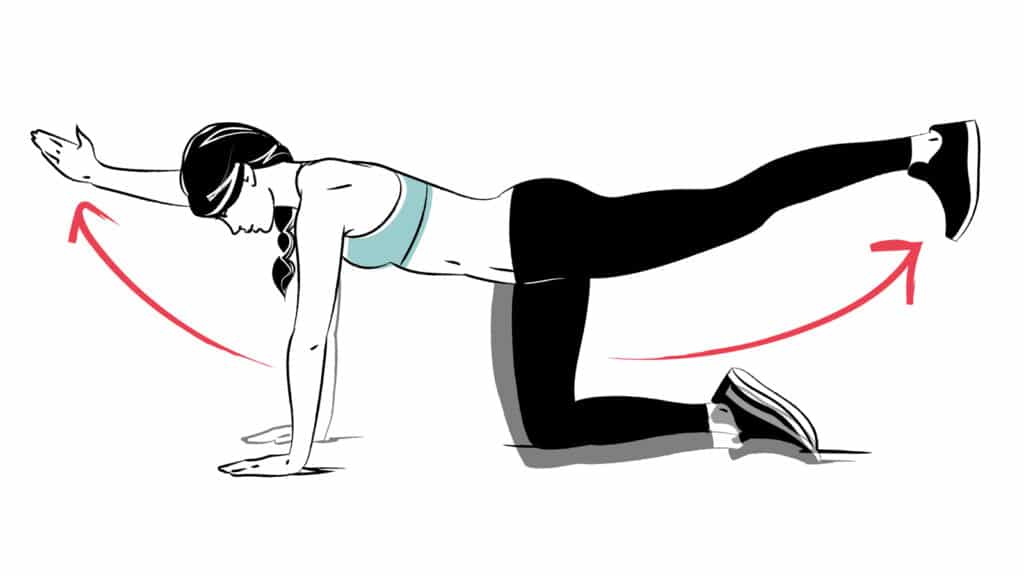
This anti-rotation exercise works your abs and core muscles in ways that are normally neglected. The aim is to keep your spine straight and avoid twisting.
How To Do Bird Dog: Start on all fours with your wrists underneath your shoulders and your knees in the same plane as your wrists. Look down and concentrate on maintaining a neutral spine. Squeeze your shoulder blades and your abs, keeping your spine straight. Extend one arm and your opposite leg, squeezing your glutes. Pause and make sure your spine stays straight. Lower your limbs and repeat with the opposite arm and leg. Aim for 3 sets of 10 repetitions on both sides.
7. Supermans
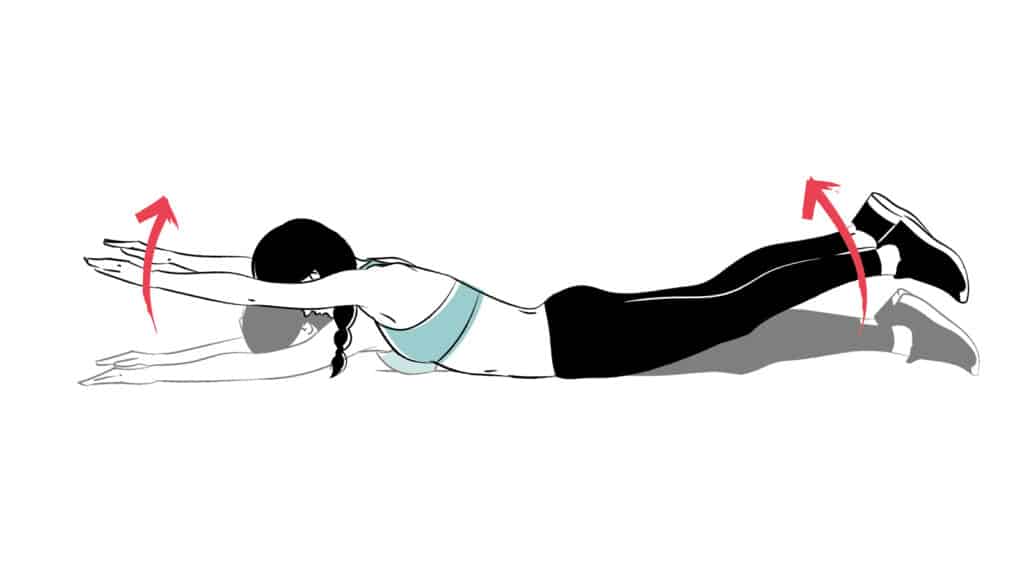
This is another great exercise for your posterior core. Start on your stomach with arms straight in front and legs straight behind. Lift your arms and legs off the floor, keeping your head in a neutral position. Aim for your hands and feet to be about 4-6 inches off the floor. Hold for 2-3 seconds. Lower to your starting position and repeat for 3 sets of 10 repetitions.
Regression: Take turns raising your upper and lower body until you’re strong enough to raise both at once.
Glute Exercises
A strong core needs a strong foundation. Finish off your core workout with these glute exercises.
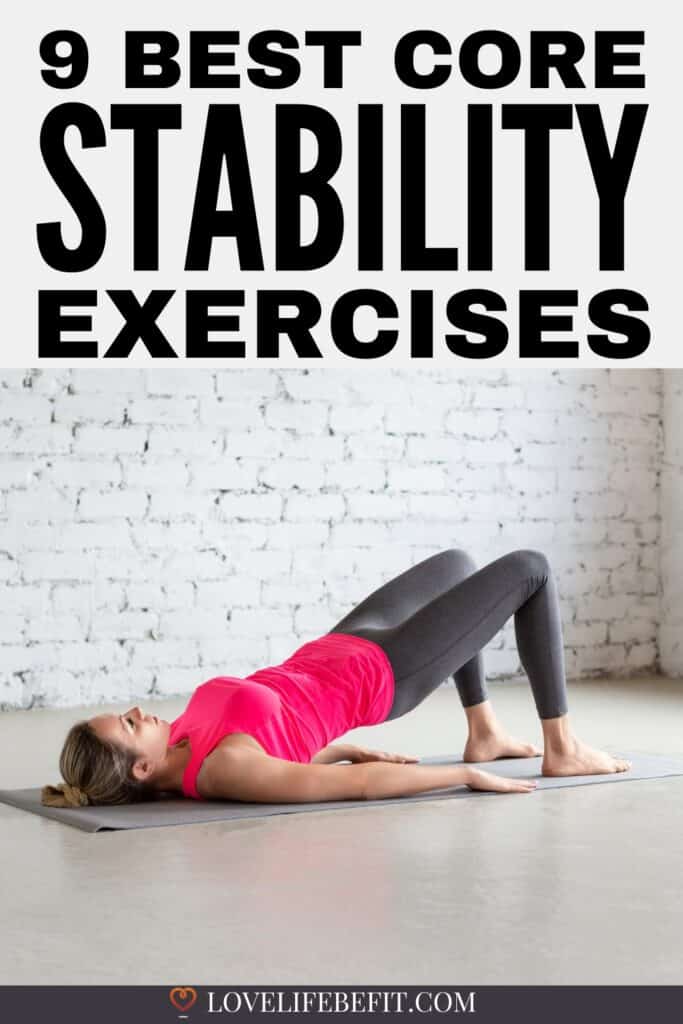
8. Glute Bridge
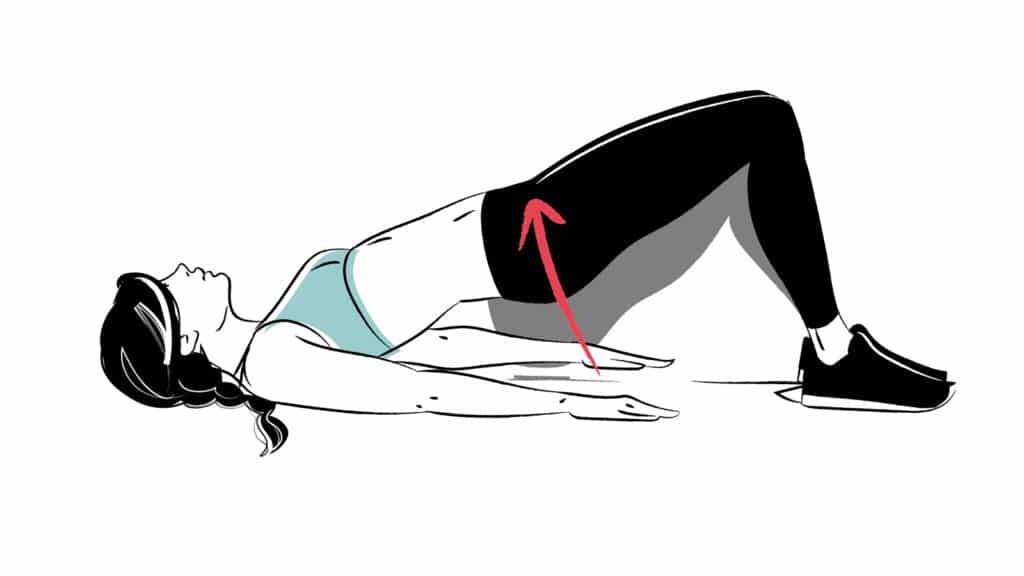
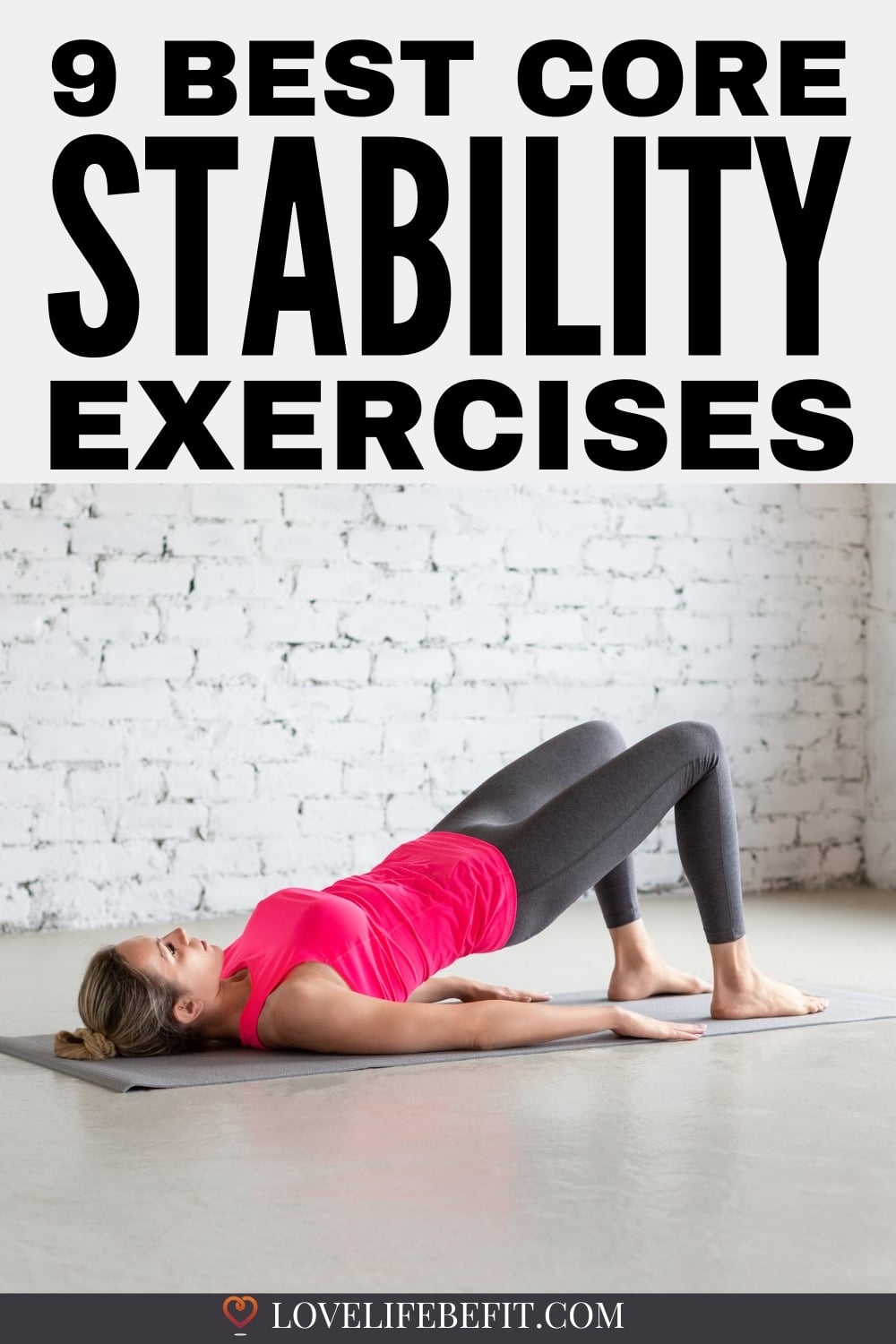
This is a key exercise for your upper glutes. Lie on your back with your knees bent and feet hip-width apart. Squeeze your glutes as tight as you can and engage your core. With your upper back on the floor, lift your hips off the ground, keeping the squeeze constant. Don’t arch your back. When your hips are fully lifted, pause and squeeze everything even tighter. Then lower your hips, still keeping everything tight and your glutes engaged. Aim for 3 sets of 10 repetitions.
9. Single Leg Glute Bridge
This progression from a standard glute bridge targets each side individually. Lie on your back with your knees bent and feet hip-width apart. Straighten your left leg and flex your foot. Raise your left leg so it’s in line with your right leg. Keep your upper back on the floor, engage your glutes, and raise your hips. Squeeze those glutes tight! Make sure you’re feeling the effort in your glutes and not your hamstrings. Lower your hips to the floor. Aim for 3 sets of 10 repetitions. Repeat on the other leg.