9 Knee Strengthening Exercises For Bad Knees
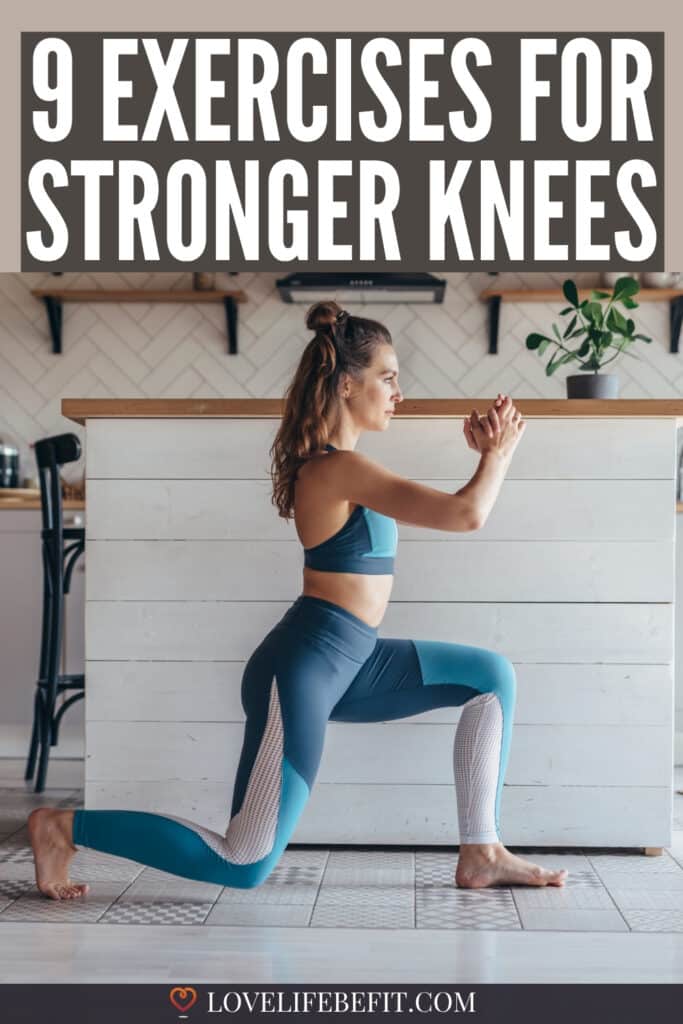
Strengthening the muscles that support your knee reduces stress on your knee joint. With strong quadriceps, hamstrings, and supporting muscles around your knee, you’ll improve shock absorption when you run or walk, stabilize your knee cap, and reduce minor knee pain. Use these knee-strengthening exercises to build stronger, more resilient knees less prone to injury.
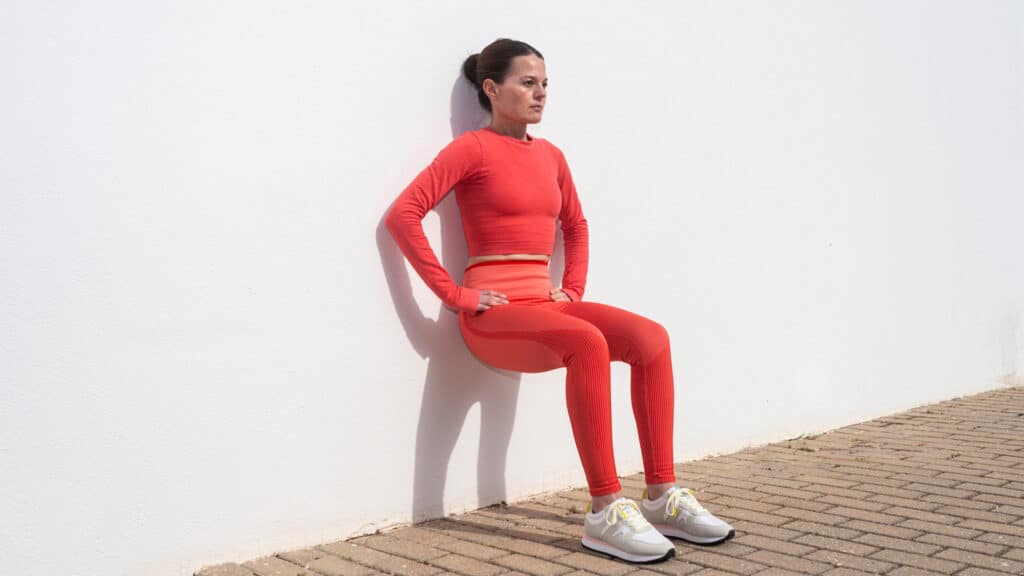
3 Tips To Avoid Bad Knees
1. Get Moving & Strength Train
Being active is crucial for all your joints. Your body is designed to move, and even if you suffer from conditions such as osteoarthritis, it’s still important to keep moving. Work with your body and start with low-impact activities such as walking and cycling. As your knee strength improves, you’ll be able to add in higher-impact activities.
2. Maintain A Healthy Weight
Every excess pound you carry adds 3 pounds of pressure to your knee joint when you walk and 10 pounds when you run! This excess weight accelerates cartilage breakdown in your knee, causing knee pain. Maintaining a healthy weight is one of the most important steps you can take to avoid knee problems. If you’re overweight, just losing a few pounds can make a huge difference.
3. Improve Your Posture
Good posture helps with the proper alignment of your knee joint. When you stand without slouching, with your weight evenly distributed between both feet, your hips are aligned correctly over your knees and your knees over your ankles, minimizing stress on your knee joints. Spending too much time sitting at a desk every day weakens your glutes and shortens your hamstrings and hip flexors, affecting the correct alignment and movement of your knee joint.
Knee Strengthening Exercises For Runners
Despite common myths, runners have stronger knees than non-runners, and you’re more likely to suffer from knee pain if you’re a non-runner. Running may have a protective effect against osteoarthritis and other causes of knee pain, but like everything in life, if you overdo it, you will suffer the consequences.
It’s also true that knees account for 40% of all injuries in female runners (31% in men), according to research published in the Journal of Sports Science and Medicine (2019). So if you’re a runner who wants to stay injury-free, strong knees should be a priority. These knee-strengthening exercises will help anyone with weak knees, but they’re especially important for runners.
The Best Knee Strengthening Exercises
1. Squats
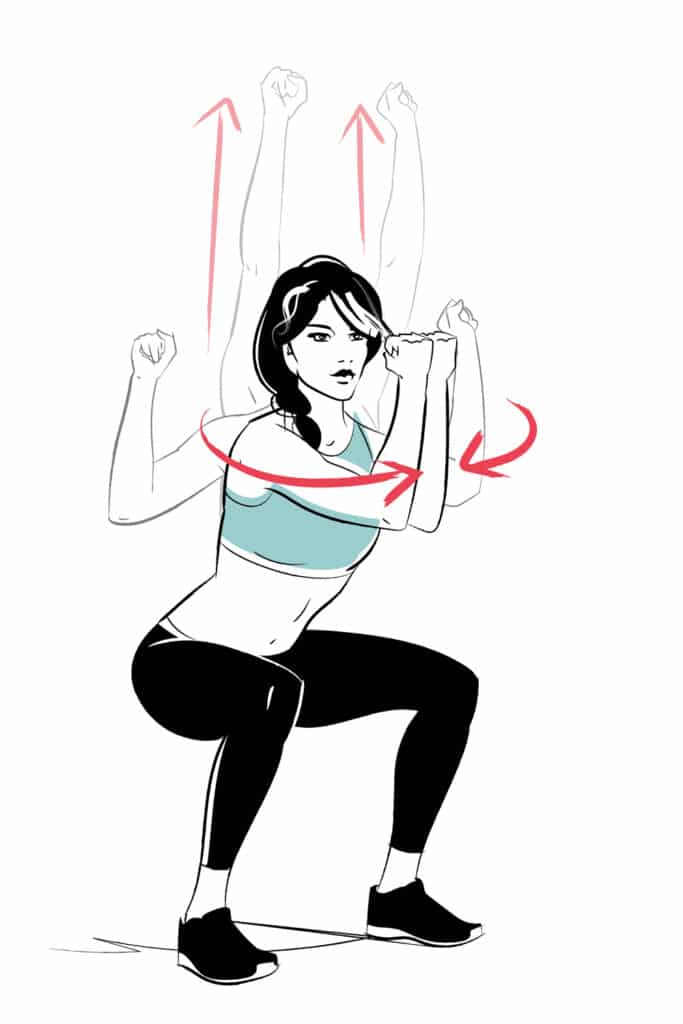
Squats are a staple for knee strength, building the quadriceps, hamstrings, and glutes that act as shock absorbers and provide stability to the joint. Work within your current ability, going as low as possible without knee pain.
How To Do A Squat: Stand with your legs just over hip-width apart, feet flat on the floor. Keep your back straight and your chest upright. Bend at the knees and squat down as far as possible. Drive through your heels to return to the standing position. Build to 3 sets of 10 repetitions.
Regression: Use a chair or doorframe to take some of your weight, or try wall squats, starting in a squat with your back against a wall, then straighten your legs to raise your torso while sliding your back up the wall. Use the wall for support to return to the squat position.
2. Reverse Lunge
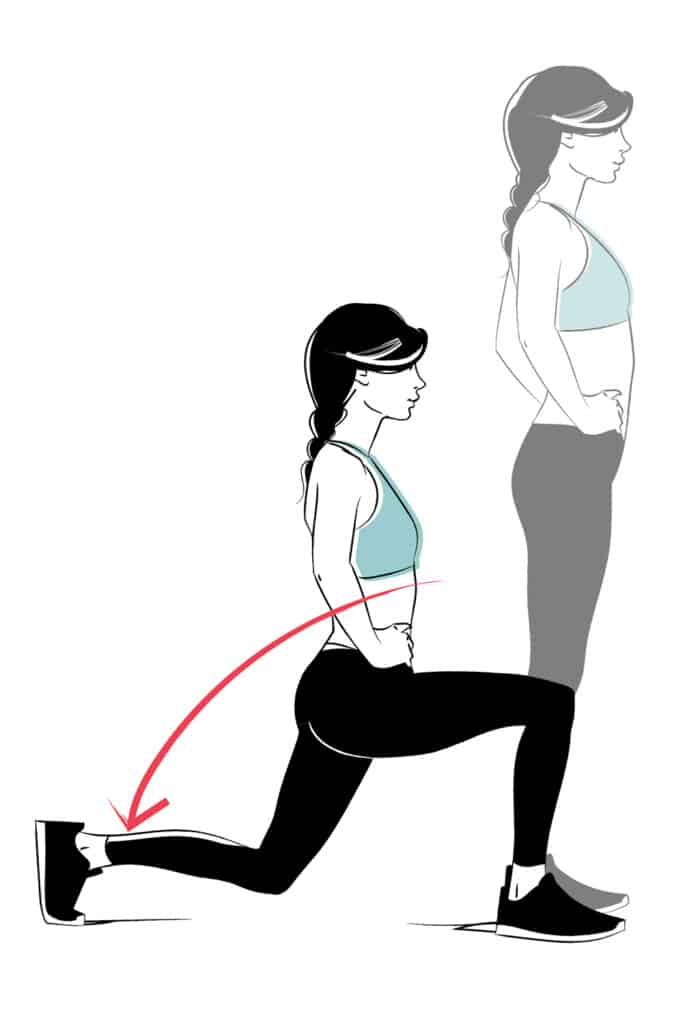
Reverse lunges are a knee-friendly exercise that targets the glutes and hamstrings to improve shock absorption. By stepping backward, you’re avoiding the impact forces of forward lunges.
How To Do Reverse Lunges: Start in a standing position and engage your core muscles. Take a big step backward with your left foot. Sink your right knee to 90 degrees, and at the same time, lower your left knee so it’s hovering just off the floor. Push back up and return to the starting position. Build to 3 sets of 10 repetitions on each side.
Regression: Place your hand on a chair for support.
3. Single Leg Deadlifts
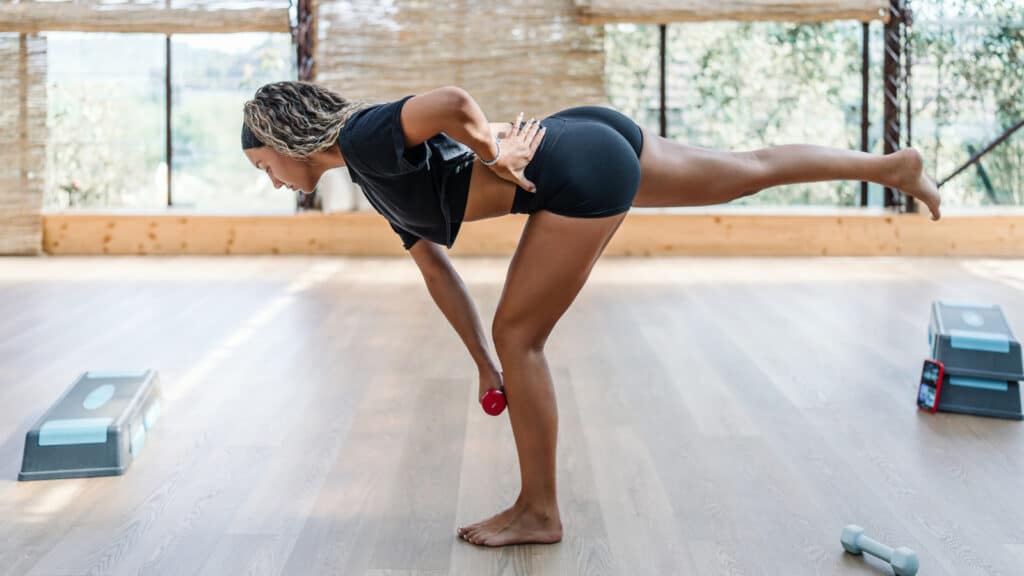
Test your balance and target your glutes and hamstrings.
How To Do Single Leg Deadlifts: Start with your weight on one leg. Engage your glutes. Hinge at the hips and tilt your body forward with your weight-bearing leg slightly bent and your free leg pivoting straight out behind you. Keep your back straight. Reach your hands to the floor in front of you. Return to the starting position. Build to 3 sets of 10 repetitions on each leg.
4. Banded Lateral Walk
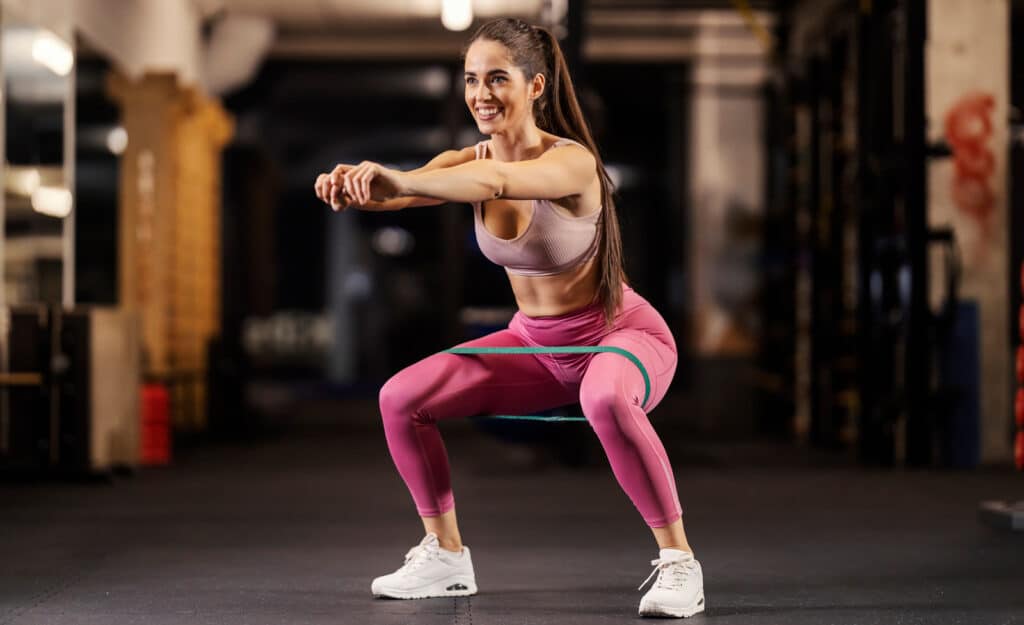
This is an excellent exercise for maintaining proper tracking of your knee joint. They target your glutes and maintain pelvic stability.
How To Do A Banded Lateral Walk: Start by placing the band around your ankles (some people prefer to have it just above their knees) with the band flat. Your feet should be shoulder-width apart, and the band taut. Bend your knees slightly into a semi-squat position, and activate your glutes, keeping your weight evenly distributed through both legs. Shift your weight onto one leg and step to the side with the other while facing forward, working against the band’s resistance. Follow with your other foot so that your feet are again hip distance apart. Keep side-stepping until you’ve completed the desired number of reps, then repeat in the other direction. Build to 3 sets of 10 repetitions in both directions.
5. Lateral Lunge
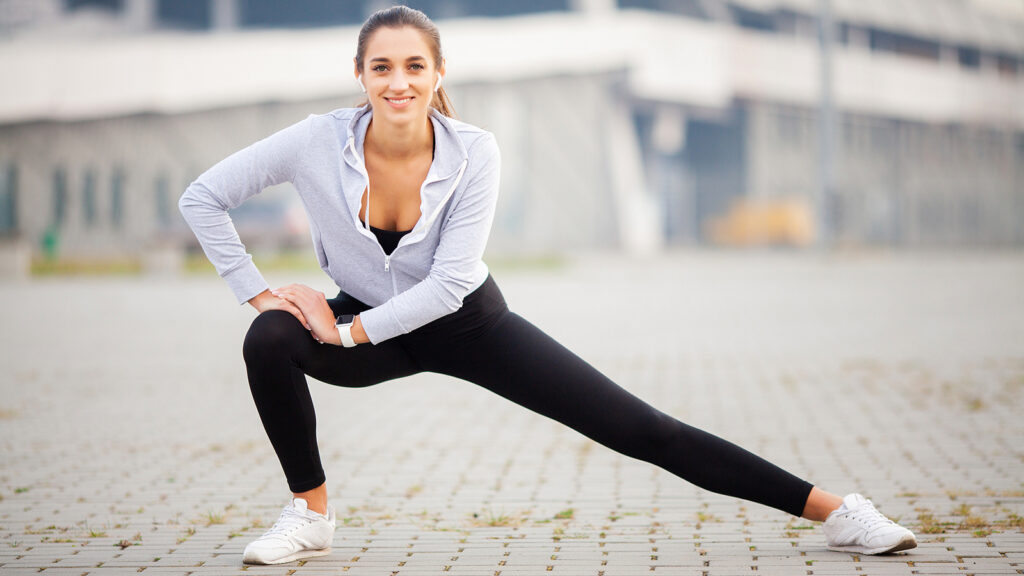
This is another exercise to target lateral movement. If you’re a runner, walker, or cyclist, your motion is primarily forward, with little side-to-side motion. Lateral lunges will train weak inner thighs (adductors) and outer thighs (abductors).
How To Do Lateral Lunges: Start with your feet hip-width apart. Take a large step out to the side, bending at the knee, and shift your body weight to the same side. Keep your chest lifted, spine neutral, and core engaged. Try to keep your knee in line with your big toe, foot pointed forward, and keep your other leg straight. Push pack up to your starting position and repeat on the other side. Build to 3 sets of 10 repetitions for both legs.
6. Step Ups
Step-ups can improve strength and stability in your knee joint, but it’s important to maintain good form and keep the step height manageable.
How To do Step Ups: Use a sturdy platform at knee height, such as a gym bench. Place your foot on the platform and drive your body up by pushing through the heel of your raised foot. Step back down in a slow, controlled motion. Repeat with the other leg. Build to 3 sets of 10 repetitions for both legs.
7. Single Leg Sit To Stand
This is a vital exercise for building quadricep strength and knee resilience. Using one leg forces the hips and core to stabilize and prevent the knee from caving in.
How To Do A Single Leg Sit To Stand: Sit on the edge of a sturdy chair or bench, lift one foot off the ground, and drive through the heel of the other leg to bring yourself to standing in a slow, controlled motion. Slowly lower yourself back to the starting position. 3 sets of 10 repetitions for both legs
Regression: Instead of lifting one leg off the ground, stretch it out in front of you so it takes a small proportion of your weight as you stand.
8. Wall Sit With Calf Raises
This exercise targets your quadriceps and calf muscles in a flexed-knee position. It’s excellent for improving knee stability and will also do wonders for your ankles.
How To Do A Wall Sit With Calf Raises: Stand with your back to a wall with your feet about two feet out and slide your back down the wall until your hips and knees are at a 90-degree angle. Engage your core and perform calf raises by slowly pushing through the balls of your feet to raise your heels as high as possible. Lower and repeat. Build to 3 sets of 10 repetitions.
9. Tib Raises
Tib Raises target the tibialis anterior muscle that runs down the front of your shin. Strengthening this muscle helps to absorb impact forces and protect the knee, improving your ability to slow down and decelerate. It helps runners to descend without hurting their knees.
How To Do Tib Raises: Stand with your back against a wall. Walk your feet 12 to 18 inches away from the wall. Your legs should be straight but with a slight bend in your knees. With your heels planted on the floor, raise your toes as high as possible, pointing towards your shins. Hold at the top for 1-2 seconds, then slowly lower. Aim for 3 sets of 15 to 25 repetitions until you feel the ‘burn’ in your shins.