Walking Lunges Workout: Tips For A Stronger, Tighter Butt
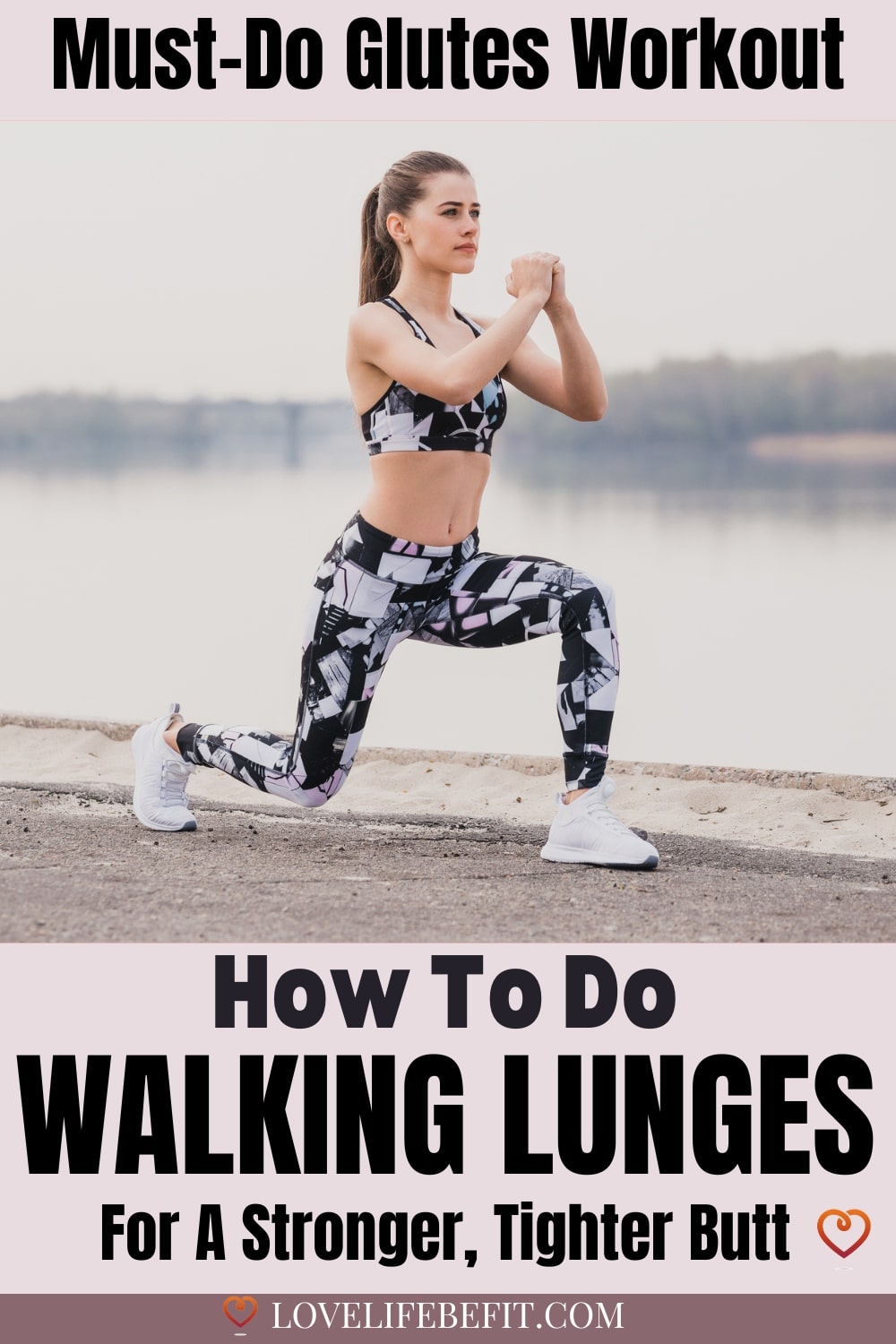
Strengthen and tone your lower body with walking lunges. By adding a walking lunges workout to your exercise regimen, you’re targeting your glutes, hips, and core while improving your balance and stability.
To get the best out of your workout, you need to nail your technique. Done correctly, you’ll fire up those glutes for a stronger, tighter butt.
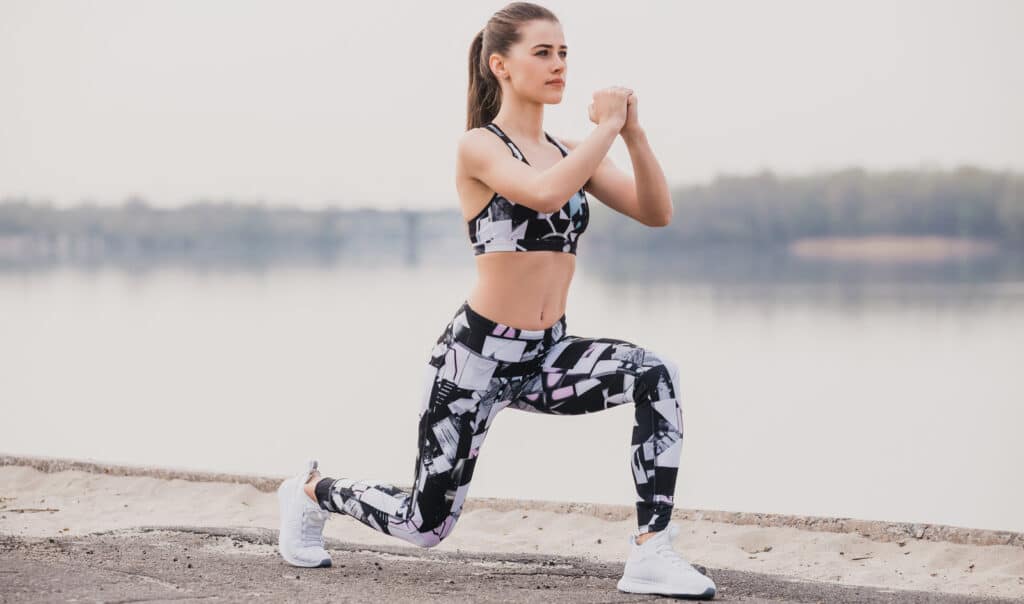
Benefits Of Walking Lunges
- Walking lunges build strong glutes. It’s a workout for your entire lower body: quadriceps, hamstrings, calves, abdominals, and hips.
- They help to increase your range of motion by loosening up your hips and hamstrings. Walking lunges are a terrific warm-up exercise before running or walking.
- Walking lunges improve your balance and coordination. Performed properly, you’re activating stabilizing muscles for controlled motion.
- They help with muscle imbalances by challenging each side of your body.
How To Do Walking Lunges For Stronger Glutes
When you first try walking lunges, it’s tempting to always be thinking about the next step and use momentum to propel you forward. This minimizes effectiveness by reducing the load and making your lunges focus on your quadriceps rather than your glutes.
Instead, you need to take your time and move in a controlled manner with maximum glute activation. Keep your body upright and your core engaged at all times.
- With your legs hip-width apart, take a step, then, instead of focusing on forward motion, pause briefly and drop straight down.
- Keep the knee of your forward foot aligned with your heel, forming 90-degree angles with both your front and back leg.
- Press through the heel of your front foot and take your next step.
If you’re struggling with stability, try using a wider stanch. (I like to think of it as a monster-walk lunge variation.)
As you get stronger, you can make your walking lunges harder by adding a torso twist or trying walking lunges with weights.
Walking Lunges Workout
Use walking lunges as a pre-run warmup or add them to your walking workout. I like to use them to break up my walks by lunging for 30 to 60 seconds, after every 10 to 15 minutes of walking.
Alternatively, try one of these walking lunges glutes workout.
Pyramid Session, No Weights
- 15 seconds lunges, 15 second easy walking recovery.
- 30 seconds lunges, 30 seconds easy walking recovery
- 60 seconds lunges, 60 seconds easy walking recovery
- 30 seconds lunges, 30 seconds easy walking recovery
- 15 seconds lunges, 15 seconds easy walking recovery
Repeat 3 times with a 1-minute rest between sets.
Walking Lunges With Weights Workout
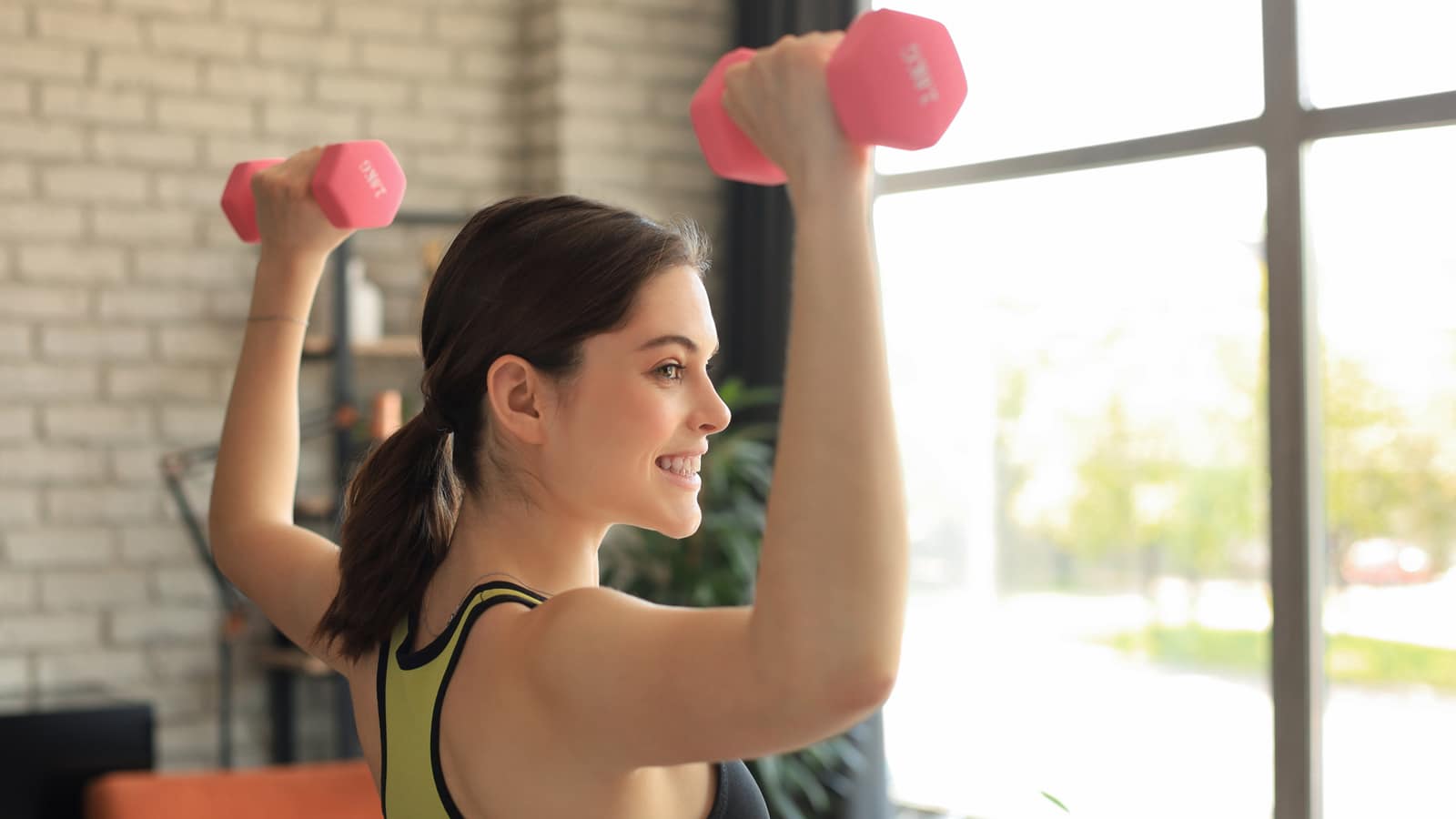
Choose a dumbbell weight that’s manageable. If the weights are too heavy, they’ll negatively impact your form. I suggest using 15 to 20-pound dumbbells for beginners.
- 10 lunges with weights (5 per leg)
- 30 second rest
- 20 lunges with weights (10 per leg)
- 60 second rest
- 10 lunges with weights (5 per leg)
Repeat 3 times with a 1-minute rest between sets
Walking Lunges With Torso Twist Workout
Add a torso twist at the bottom of each lunge. You can do this either using your bodyweight or by holding a dumbbell in front of your chest. Practice your form first before trying the workout. The torso twist can throw you completely off balance!
- 3 x 10 sets of torso twist lunges (5 per leg) with 60 seconds recovery between sets.