28 Day Walking Plan For Weight Loss: Shed Pounds And Get Fit
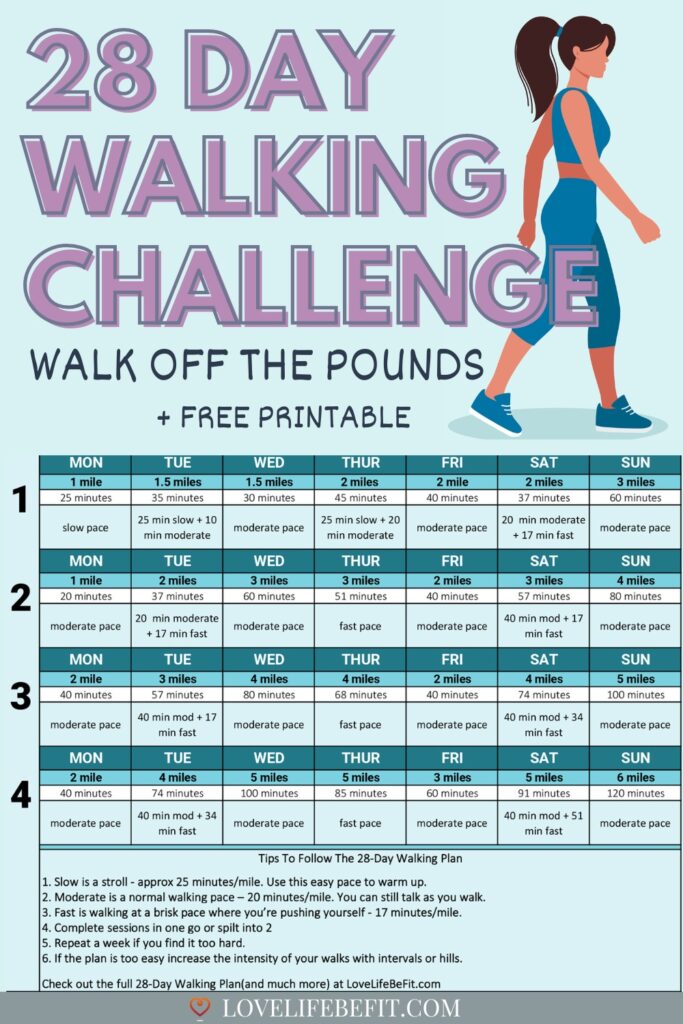
It’s easy to overlook the best way to get fit. All you need to do is walk. There’s no need for a gym membership, and you don’t need to buy any equipment. Just dig out a pair of comfortable walking shoes – and start following this 28-day walking plan for weight loss. Lose weight in just 4 weeks!
Walking is a low-impact exercise, which means it’s kinder on your joints than running. Go for a run, and you’ll probably wake up stiff and tired the next day. Take a walk, and you’ll feel refreshed and ready to go again. This makes walking for weight loss an ideal way to get active – especially if you haven’t exercised for a while.
Ready to get started? Take our 28 Day Walking Challenge! You can walk indoors on a treadmill or walk from your front door. Better still, find a local park and feel renewed from a walk in the fresh air.
28 Day Walking Plan For Weight Loss
This plan is aimed at beginners. If you want to push yourself a little harder, take the 10,000-steps-a-day challenge. This plan starts a little more gently, so it’s great for anyone who hasn’t exercised in a while. If you’re time-poor or want an easier exercise plan, try our 30 Day Walking Challenge with its shorter sessions and lower weekly mileage. If you’re a complete beginner with a lot of excess weight to shift, this 6-Week Walking Exercise Plan for Overweight Unfit Beginners is the best place to start.
Before you get started, check in with your doctor. If you haven’t exercised for a while, you’re carrying a lot of excess weight, or you have any pre-existing medical issues, it’s always best to check with your doctor before starting an exercise program.
The walking challenge uses different speeds:
- Slow is a stroll – use this easy pace to warm up.
- Moderate is a normal walking pace – you can still talk and walk.
- Fast is a brisk walking pace – you can still talk but you’ll be a little out of breath and will be making a sustained effort to keep the pace up!
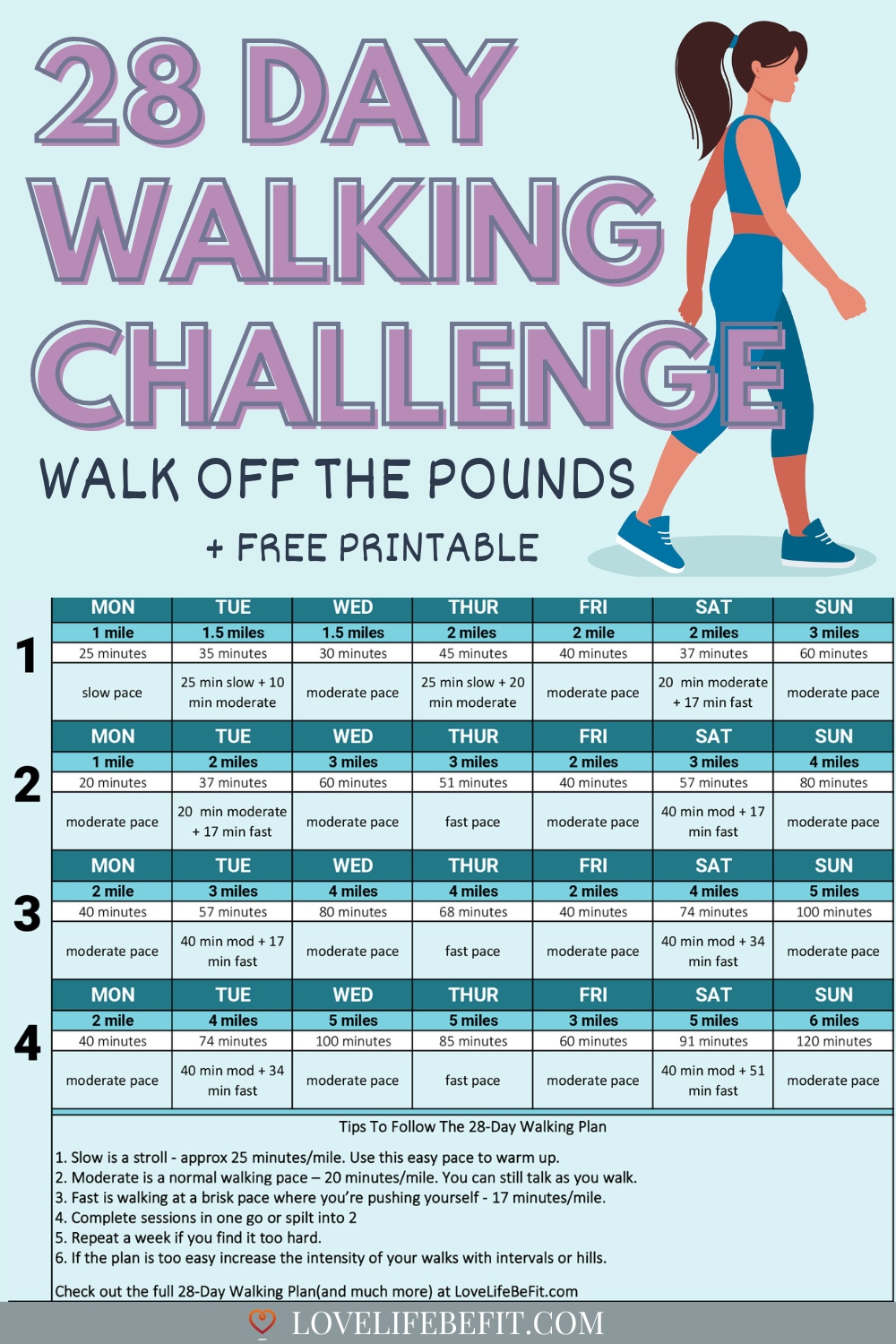
Week 1
Ease into walking daily. The week starts with a 25-minute walk at a slow pace. As you progress through the week, you’ll gradually increase your pace to moderate and start walking farther. Base your sessions on time. Distances are only a guide. For example, if you’re carrying a lot of excess weight, your walking pace may be slower than the guide distances, but you’ll still be working hard and burning calories.
| Week 1 | Workout |
| Mon | 25 min slow pace |
| Tue | 25 min slow, 10 min moderate |
| Wed | 30 min moderate |
| Thur | 25 min slow, 20 min moderate |
| Fri | 40 min moderate |
| Sat | 20 min moderate, 17 min fast |
| Sun | 60 min moderate |
| Total Miles | 13 |
Week 2
Dig deep. The workouts get longer, and the pace is moderate with three fast sessions. Work hard, but don’t overdo it. At a fast pace, you should still be able to talk. If you start off too fast, pause and get your breath back before continuing. These sessions are long – we’re aiming to shift weight, and that takes dedication. Split the daily walks into two or even three sessions if it’s a better fit with your schedule.
| Week 2 | Workout |
| Mon | 20 min moderate pace |
| Tue | 20 min moderate, 17 min fast |
| Wed | 60 min moderate |
| Thur | 51 min fast |
| Fri | 40 min moderate |
| Sat | 40 min moderate, 17 min fast |
| Sun | 80 min moderate |
| Total Miles | 18 |
Week 3
By week 3, it gets easier. The sessions are just as hard, or harder, but your body is adapting to regular exercise. You’ll be raring to go, and if you miss a session for whatever reason, you’ll feel restless and in need of your next walking fix! Walking exercise is becoming part of your life, and you’ll notice the differences in your body – strong leg muscles and a tighter leaner core.
| Week 3 | Workout |
| Mon | 40 min moderate pace |
| Tue | 40 min moderate, 17 min fast |
| Wed | 80 min moderate |
| Thur | 68 min fast |
| Fri | 40 min moderate |
| Sat | 40 min moderate, 34 min fast |
| Sun | 100 min moderate |
| Total Miles | 24 |
Week 4
The final week! Congratulations, you’ve almost finished the challenge. It’s a big final push this week – you’re walking 30 miles! Split the sessions into two or three workouts if needed. Work hard on those fast sessions, but make sure you get the pacing right on those longer workouts – it’s always okay to take a break.
| Week 4 | Workout |
| Mon | 40 min moderate pace |
| Tue | 40 min moderate, 34 min fast |
| Wed | 100 min moderate |
| Thur | 85 min fast |
| Fri | 60 min moderate |
| Sat | 40 min moderate, 51 min fast |
| Sun | 120 min moderate |
| Total Miles | 30 |
How The Walking Exercise Plan Helps You Lose Pounds
- It’s a low impact exercise making it great for beginners and can be done by almost anyone, regardless of fitness level.
- It’s an effective way of burning calories – expect to burn 80 to 100 calories per mile. Plus, the benefits of losing weight don’t stop at the end of your walk – the exercise increases your metabolism, which will help you burn more calories throughout the day.
- Walking helps to strengthen leg and core muscles – the extra muscle mass can also boost your metabolism.
- Taking a walking break can be a great stress reliever and mood booster. As chronic stress increases the desire to eat and slows fat metabolism, reducing stress is essential when you’re trying to lose weight.
Aim for a small daily calorie deficit of 300 to 500 calories, and build your diet around lean protein to keep you full, whole grains, vegetables, fresh fruit, and small amounts of healthy fats. Follow these tips to eat better.
A calorie deficit can come from exercise, dieting, or a combination of both. For best results start your walking plan at a level you can easily maintain and combine walking with some small improvements to your diet.
How Much Weight Can I Lose In 1 Month By Walking?
One month or 28 days can be long enough to really kick-start your fitness routine. Most people will lose at least 4 pounds over a 4-week period. Just make sure you don’t reward your walks with a sticky treat – a slice of cake can quickly wipe out your calorie deficit.
You may not consistently lose weight every week. Sometimes the weight loss only starts when your body has had a chance to adjust to your new regimen. Factors such as your current body weight, walking speed, and diet will affect your weight loss. If you have a lot of weight to lose, you’re working hard with every walk, and it’s easier to shed pounds. As your weight drops and you get closer to your target weight, you may need to push harder with walking intervals and hills. Power walk uphill for maximum calorie burn!
Tips To Complete The 28-Day Walking Plan:
- Learn how to walk properly: Walk with good posture. Keep your head up, shoulders relaxed, and arms bent at 90 degrees. Avoid hunching over or looking down at your feet.
- Prevent injury: Just because walking is low-impact, it doesn’t mean you can’t get injured. Avoid doing too much too soon. If you wake up feeling sore or tired, take a rest day.
- Repeat a week: If you find a week too hard, go back and repeat it! The aim is to develop a lifelong walking habit. Some people will take a little longer to build up their daily mileage – that’s okay!
- Invest in good walking shoes: Comfortable, supportive shoes or trainers are essential for walking. Invest in good walking shoes to prevent blisters and foot pain.
- Make it a habit: Consistency is key when it comes to exercise. Set a regular walking schedule and make it a part of your daily routine.
- Track your progress: Keep track of your steps and walking time to monitor your progress and stay motivated. Use a fitness app or step counter to help you track your activity.
- Mix it up: To prevent boredom and keep things interesting, vary your walking routes and keep your walking workout challenging.
- Stay hydrated: Drink plenty of water before, during, and after your walks to prevent dehydration. If it’s hot carry a water bottle.
The Next Step?
Completed the challenge? Give yourself a pat on the back and enjoy your new body. You’ll be slimmer, stronger, and full of energy. Now it’s time to set a new target. It could be walking 5 miles a day, entering a walking event, or mixing things up with walking intervals, power walking, or uphill walking. Keep pushing yourself and build on your new habit of walking!